Play by all
No student is positioned as the subject, exception or “other” in the activity.
 Aurora Jiang
Inclusive learning through multisensory play
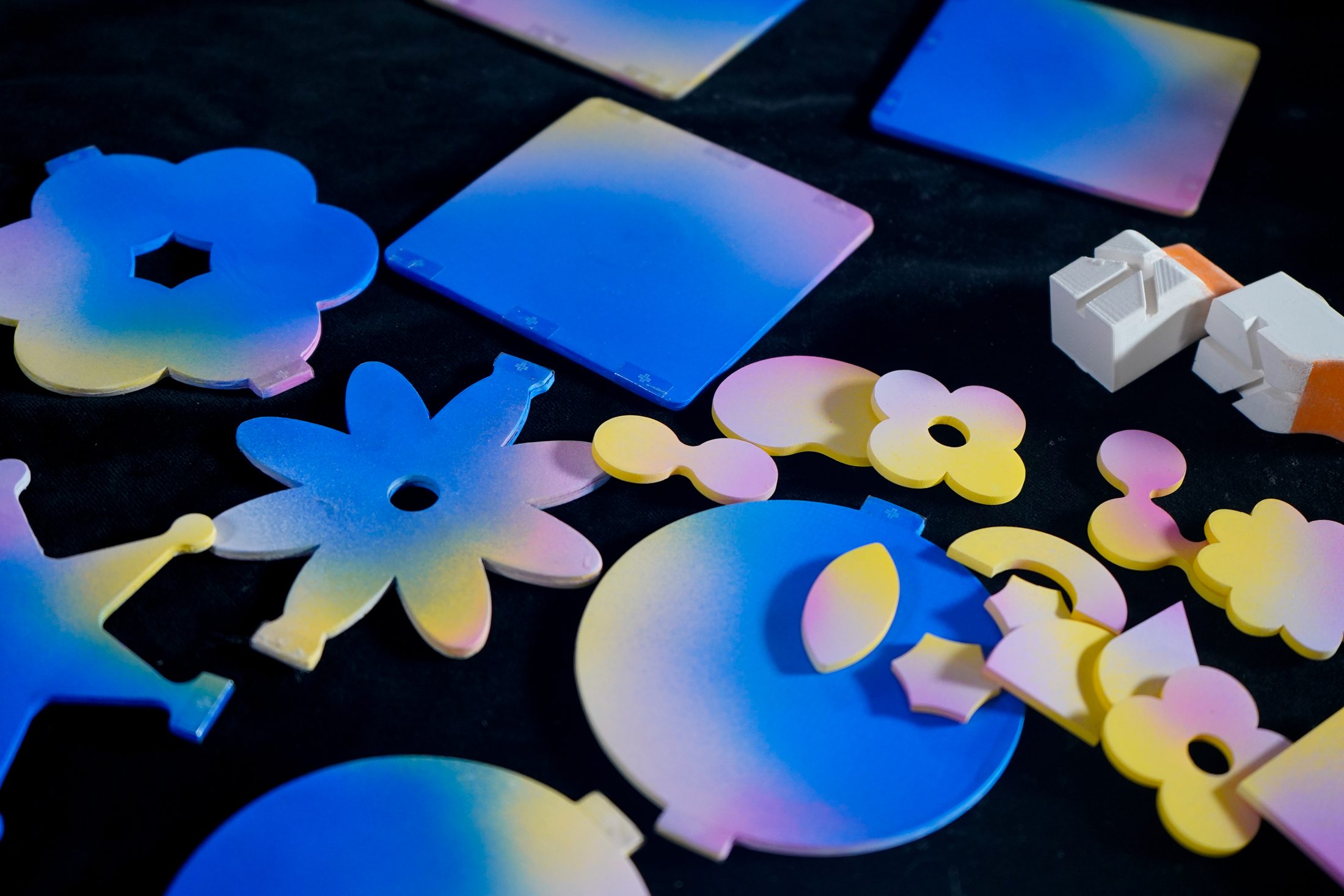
A classroom experience that helps students understand neurodiversity by creating, sharing and connecting through multiple senses.
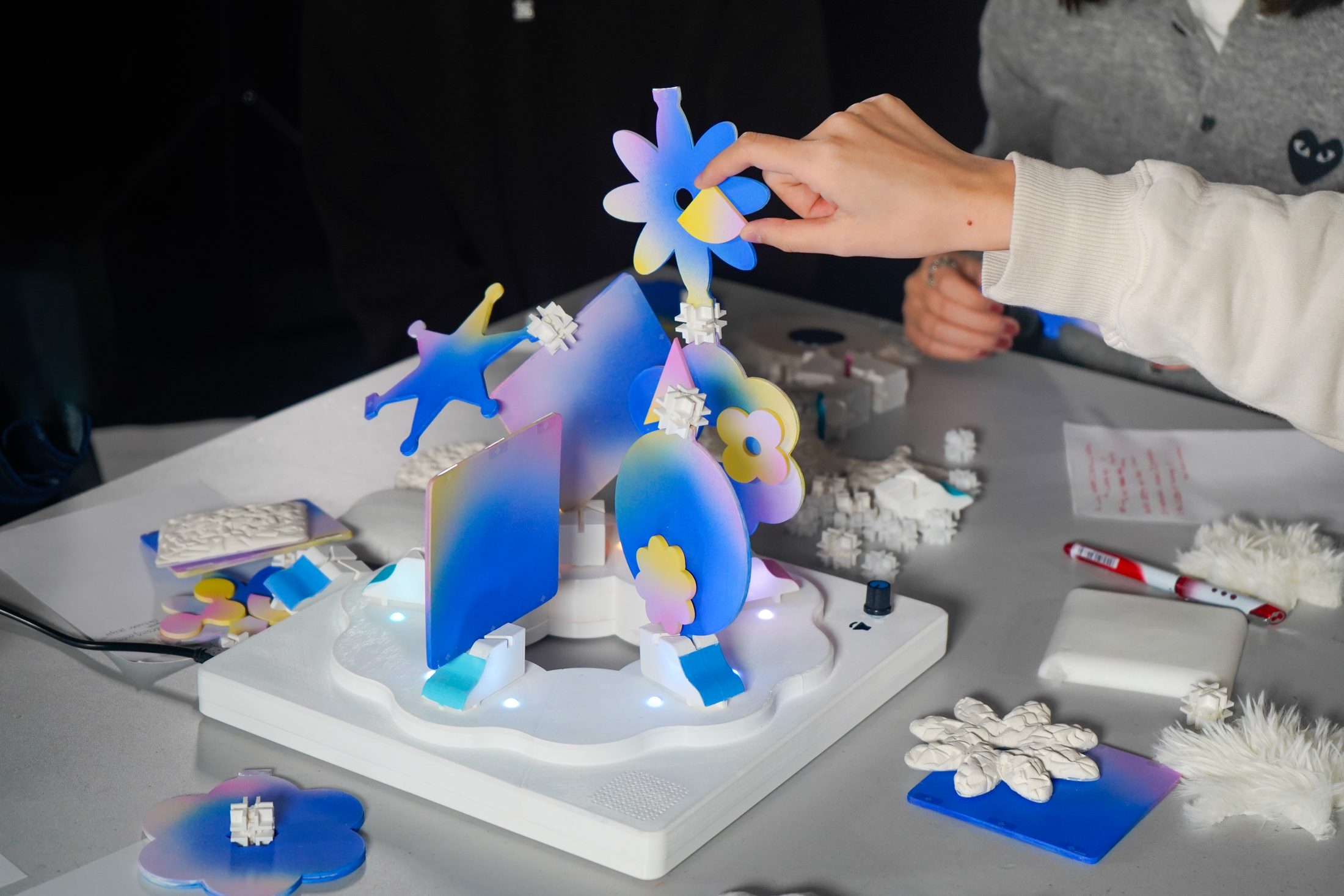
NeuroSpectrum combines visual, tactile and auditory puzzles in a guided group activity. Students express their perspectives without relying on conversation alone, then combine individual pieces into a shared installation.
The project reframes inclusion as a collective learning experience—not an intervention that singles out neurodivergent students. Research and testing were conducted in New Zealand, with the framework designed for broader inclusive-education contexts.
How might a classroom reduce social barriers without asking neurodivergent students to adapt to a single “normal” way of communicating?
Exclusion, harassment and bullying often grow from unfamiliarity and mismatched social or sensory expectations. Conventional icebreakers can amplify these barriers when they depend heavily on verbal confidence.
The opportunity was to give every student equivalent agency: different ways to express an idea, make a contribution and discover common ground.
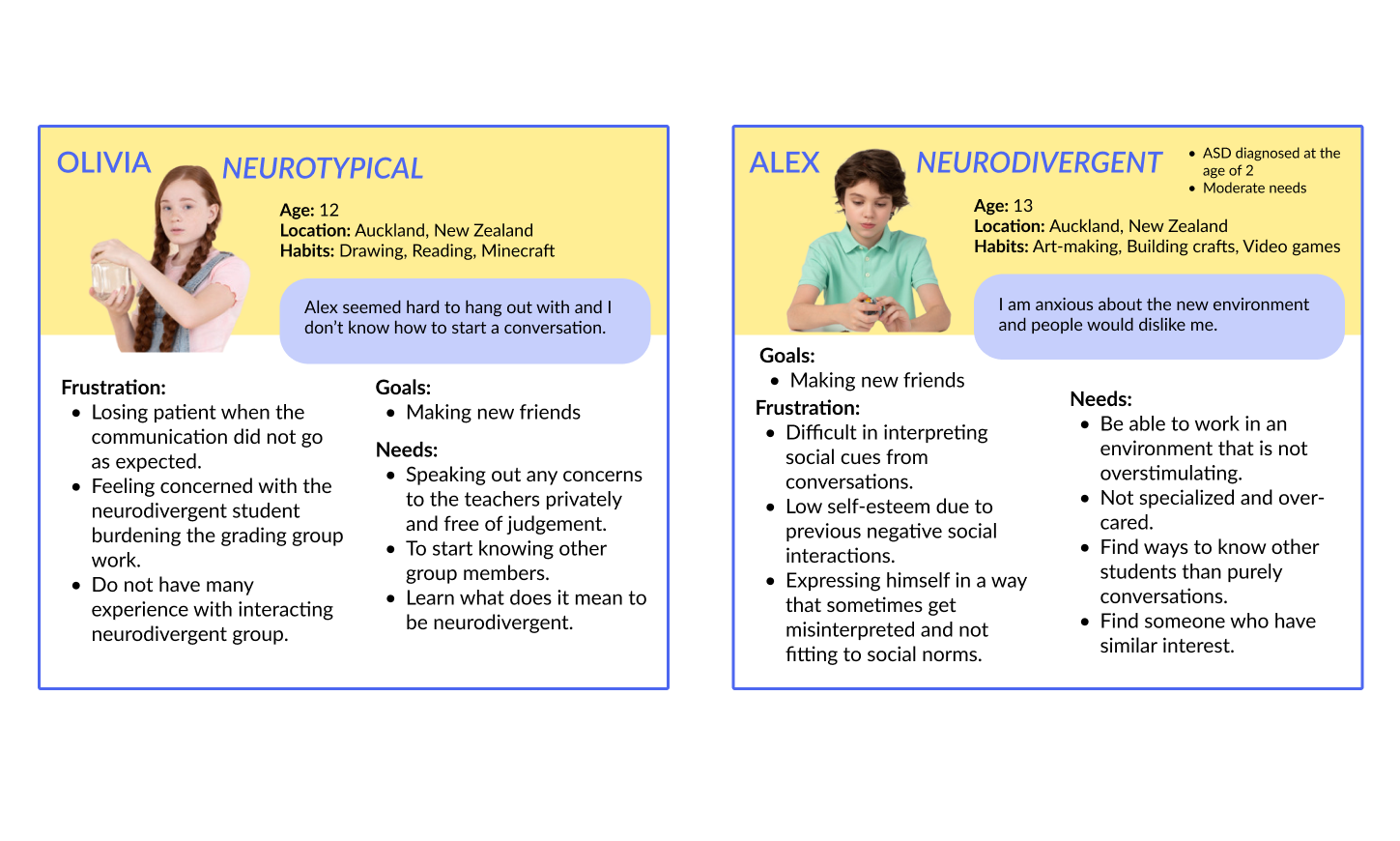
No student is positioned as the subject, exception or “other” in the activity.
Prompts guide discussion without predetermining what a successful expression should look like.
Visual, tactile and auditory channels reduce language barriers while avoiding unnecessary sensory overload.
One modular system, many valid ways to participate.
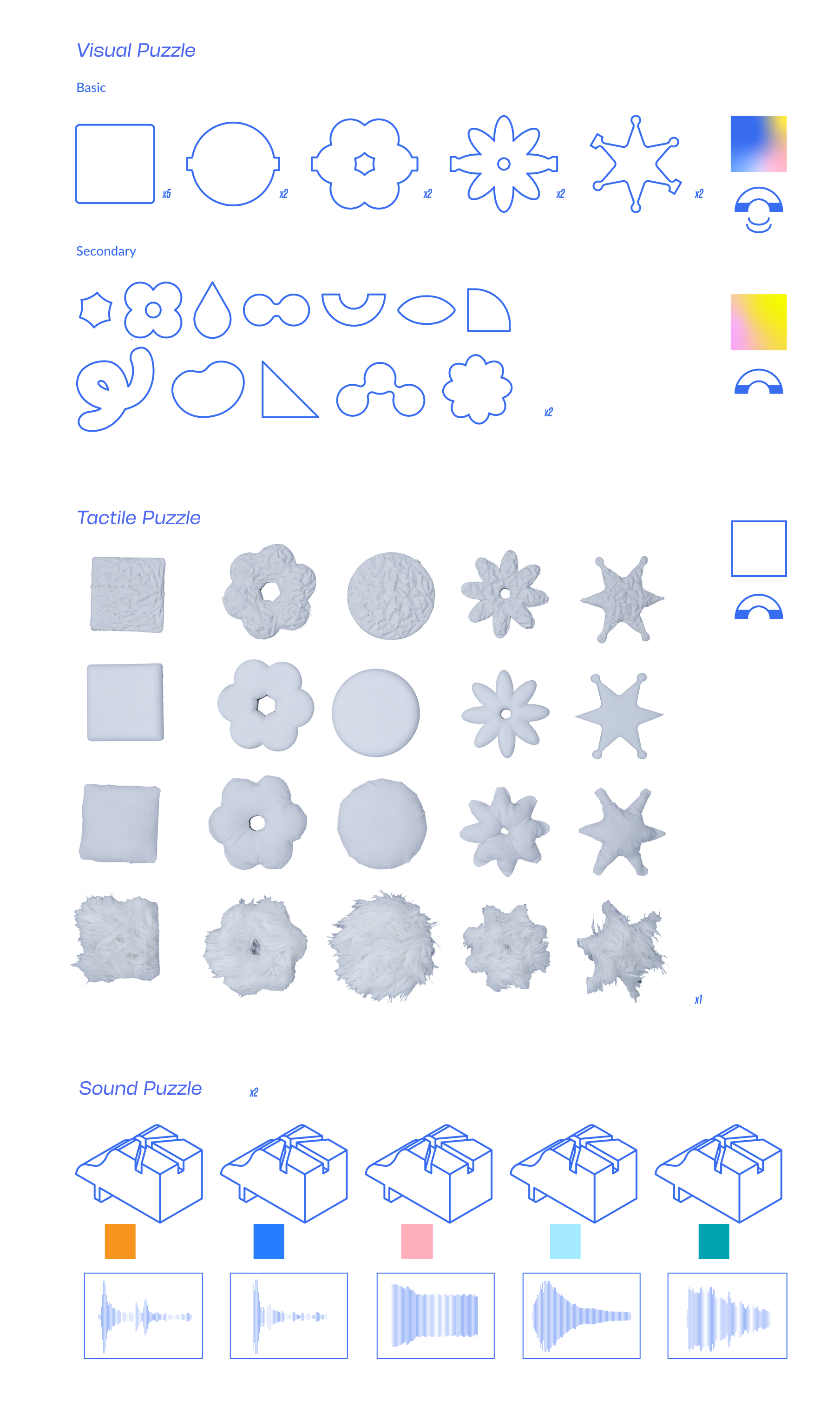
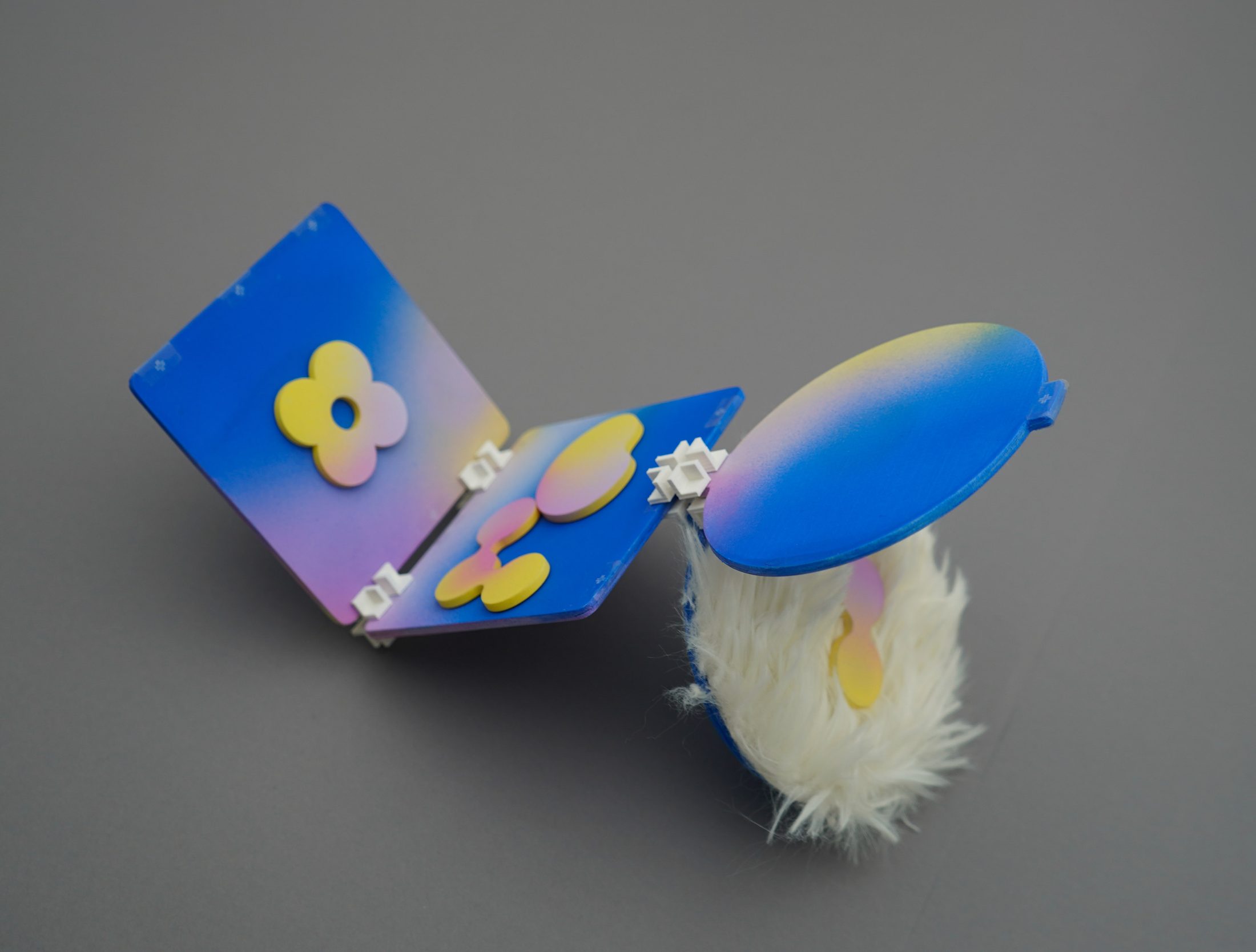
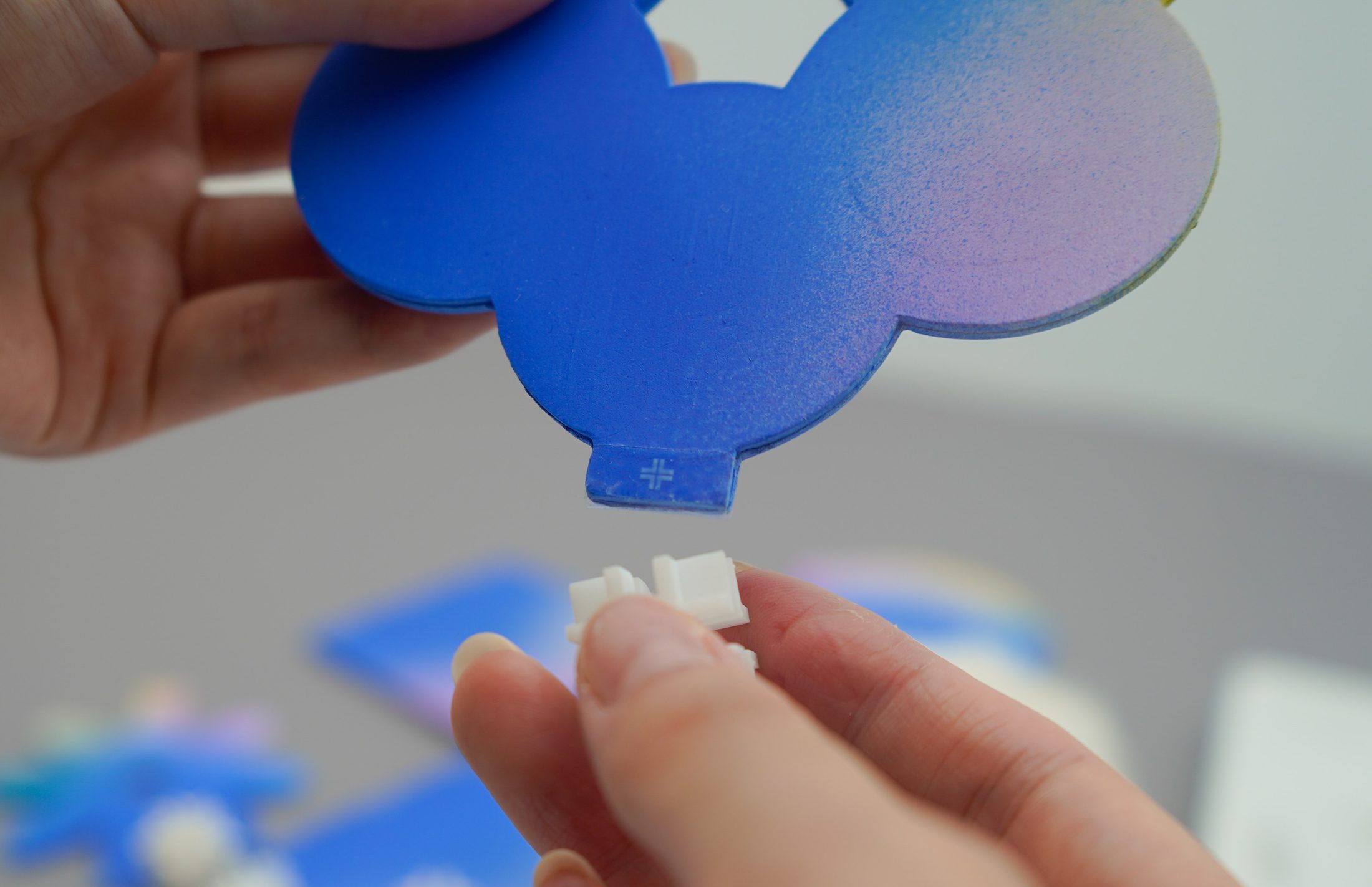
Students begin with words and short stories, then translate their interpretation into a multisensory puzzle. Modular shapes and tactile add-ons make combinations flexible rather than prescriptive.
During collaboration, the pieces become a shared sensory landscape. Similarities emerge without erasing difference, giving the class a concrete starting point for discussing neurodiversity.
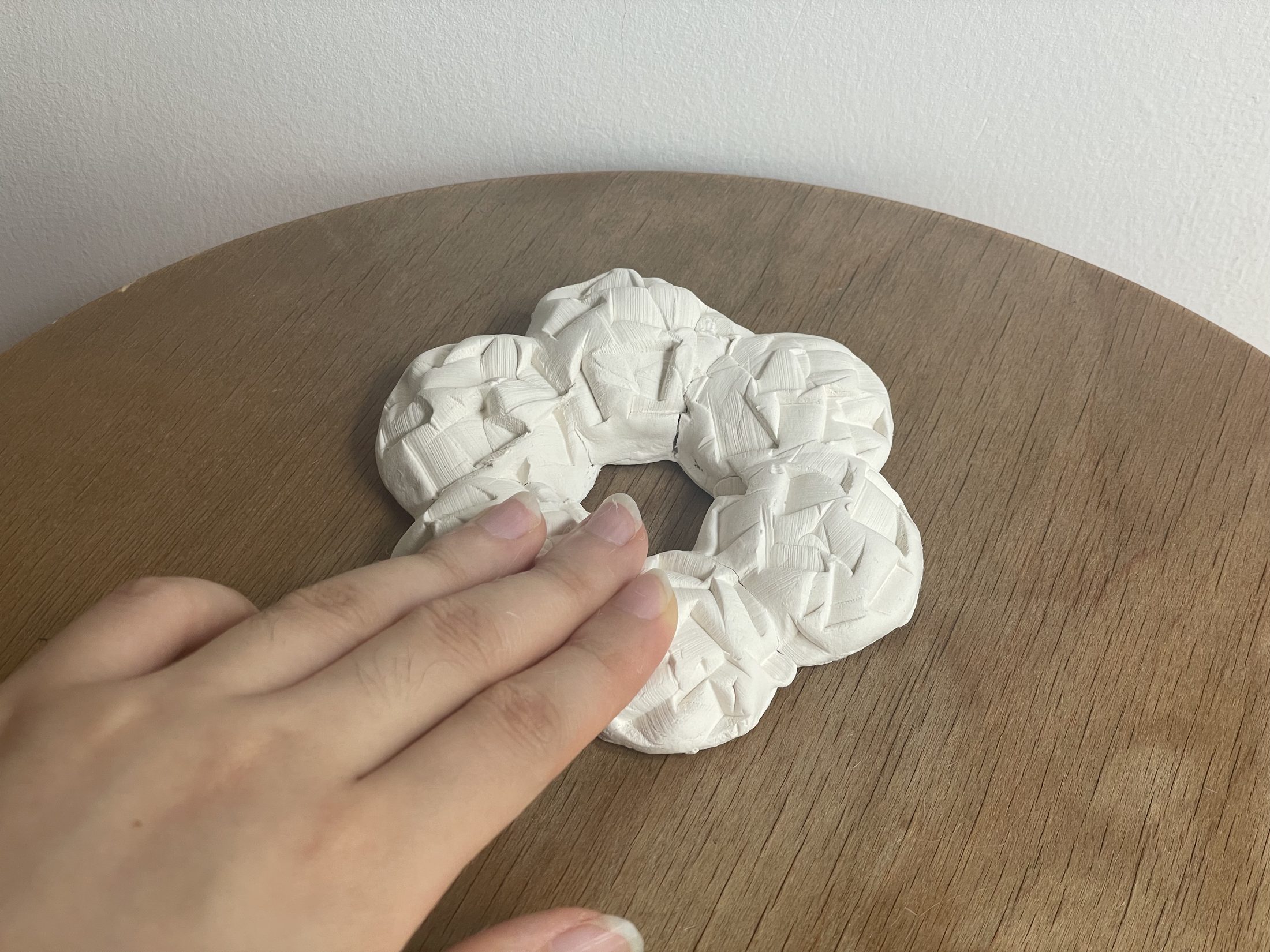
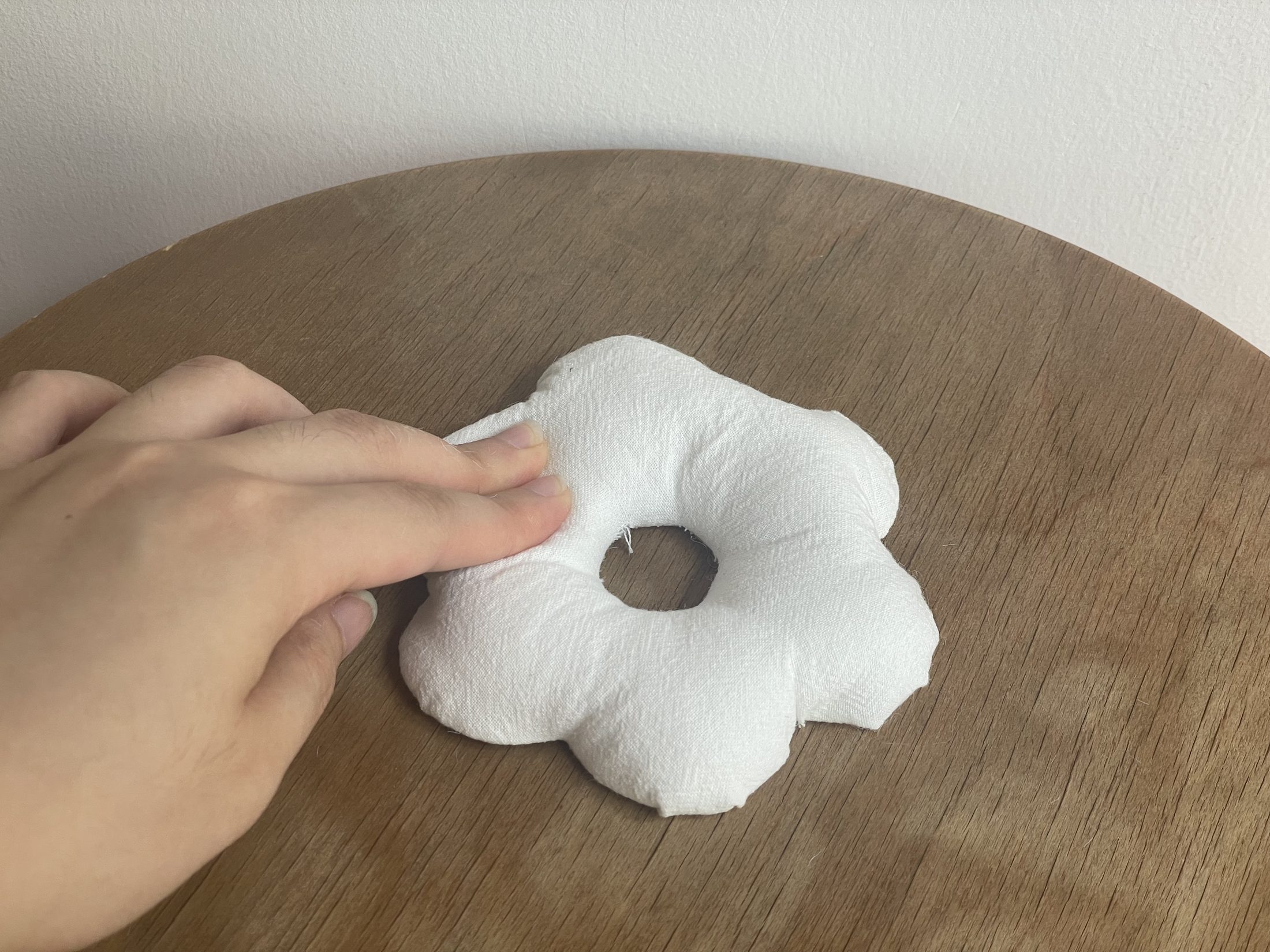
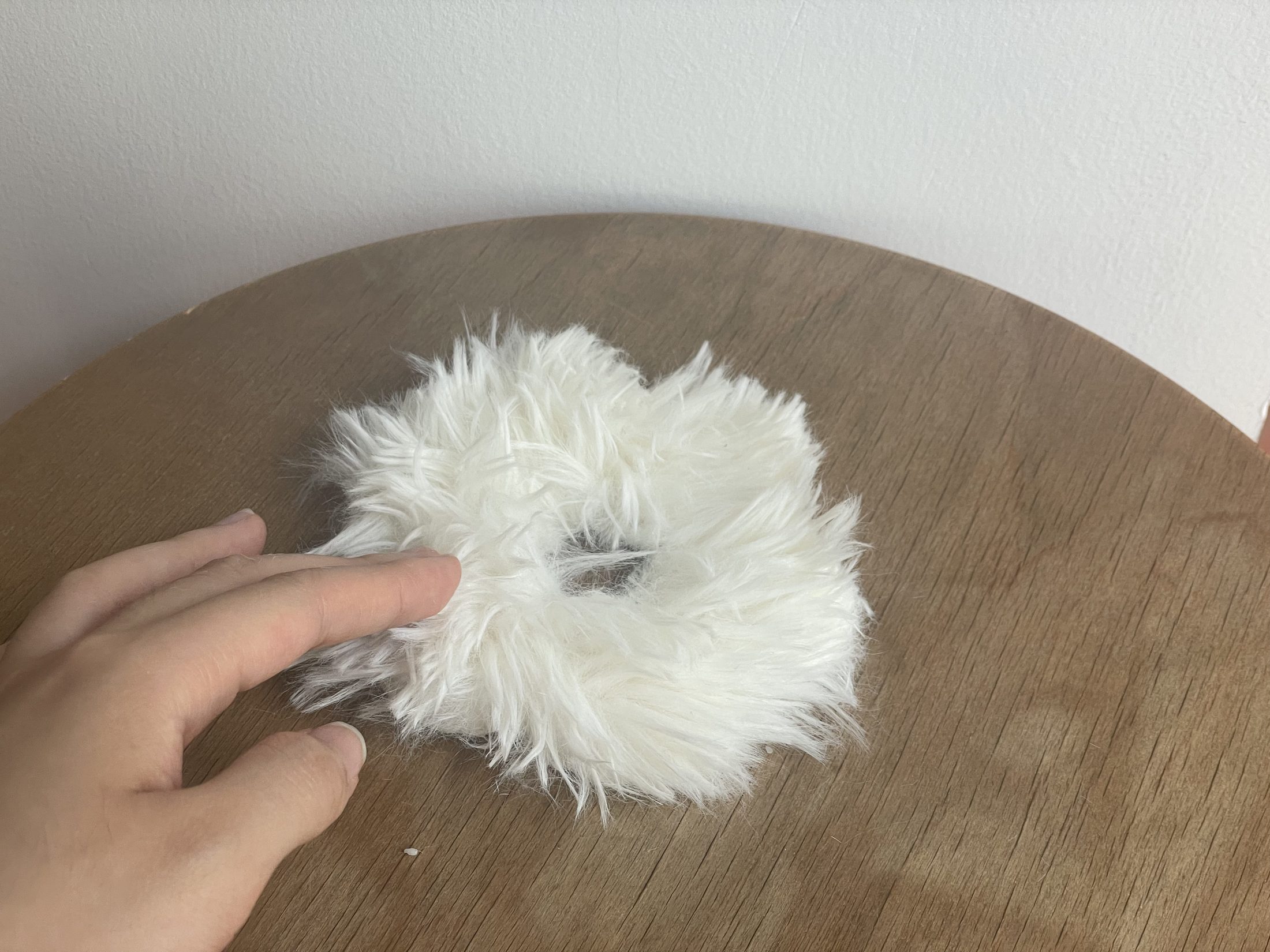
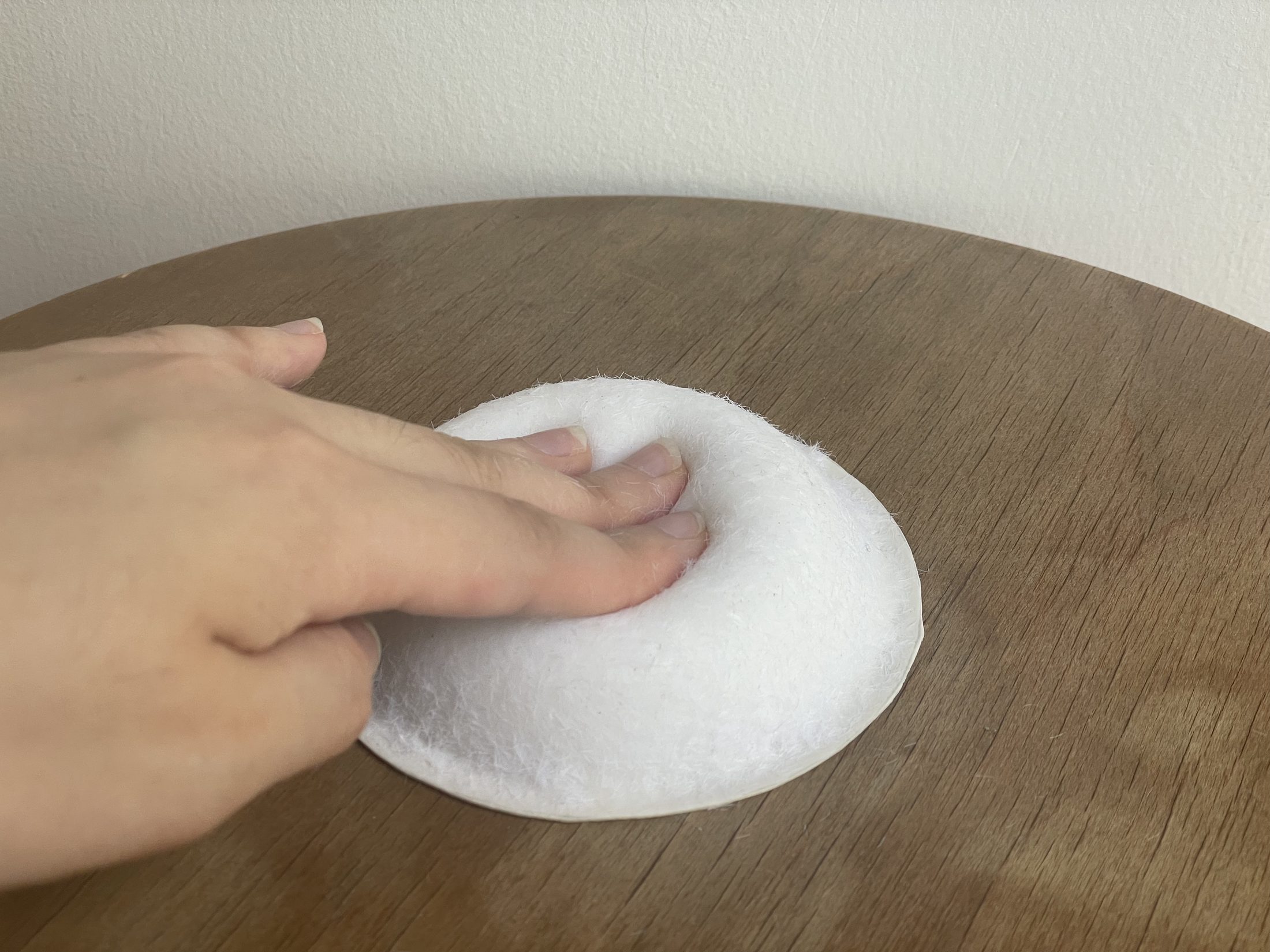
A facilitated test with five participants aged 11–15 evaluated task completion, social comfort and the clarity of the workshop sequence.
Testing led to two decisive changes: add sound puzzles as another path to connection, and create removable tactile layers so students can build richer combinations without increasing complexity.
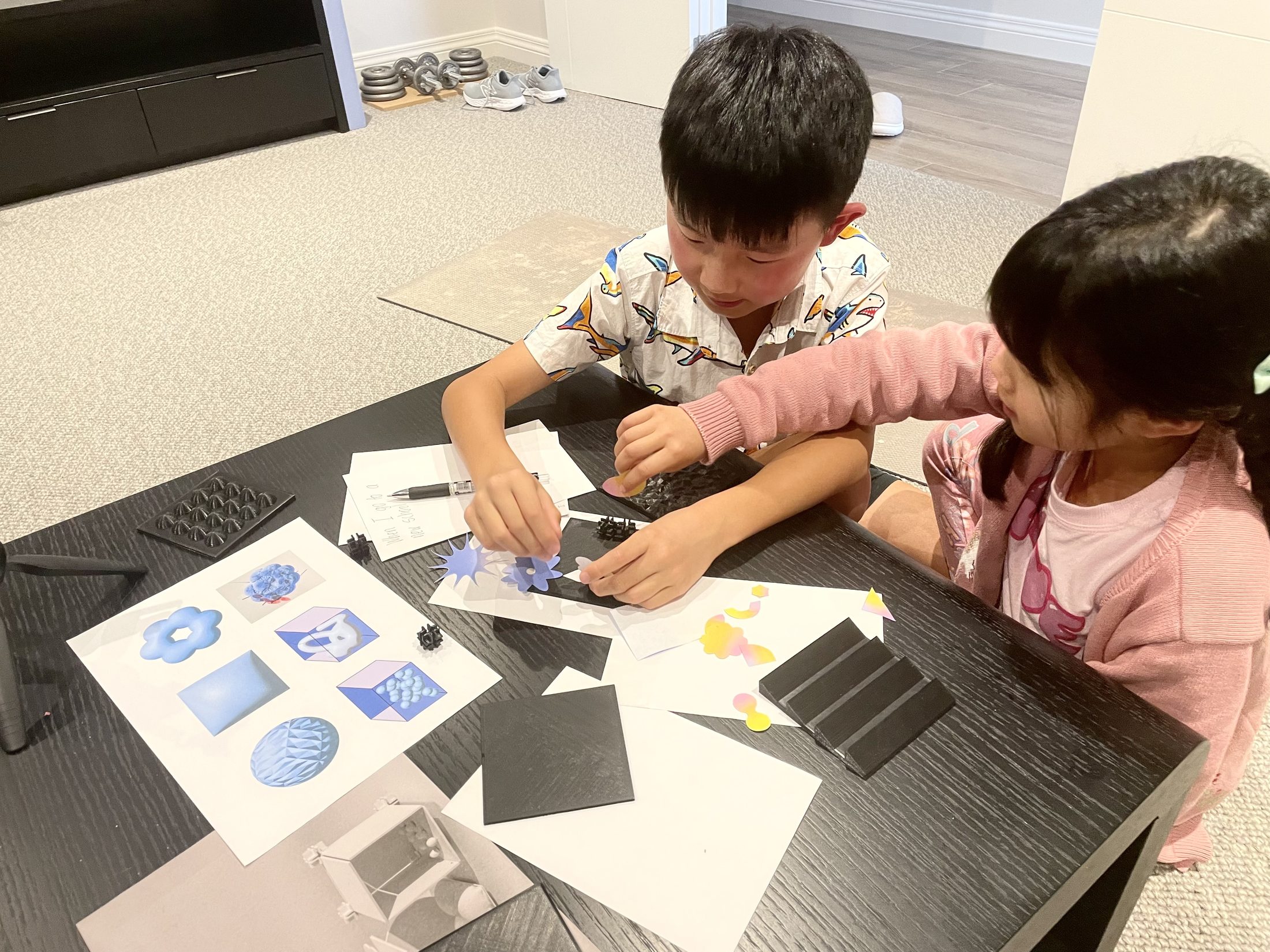
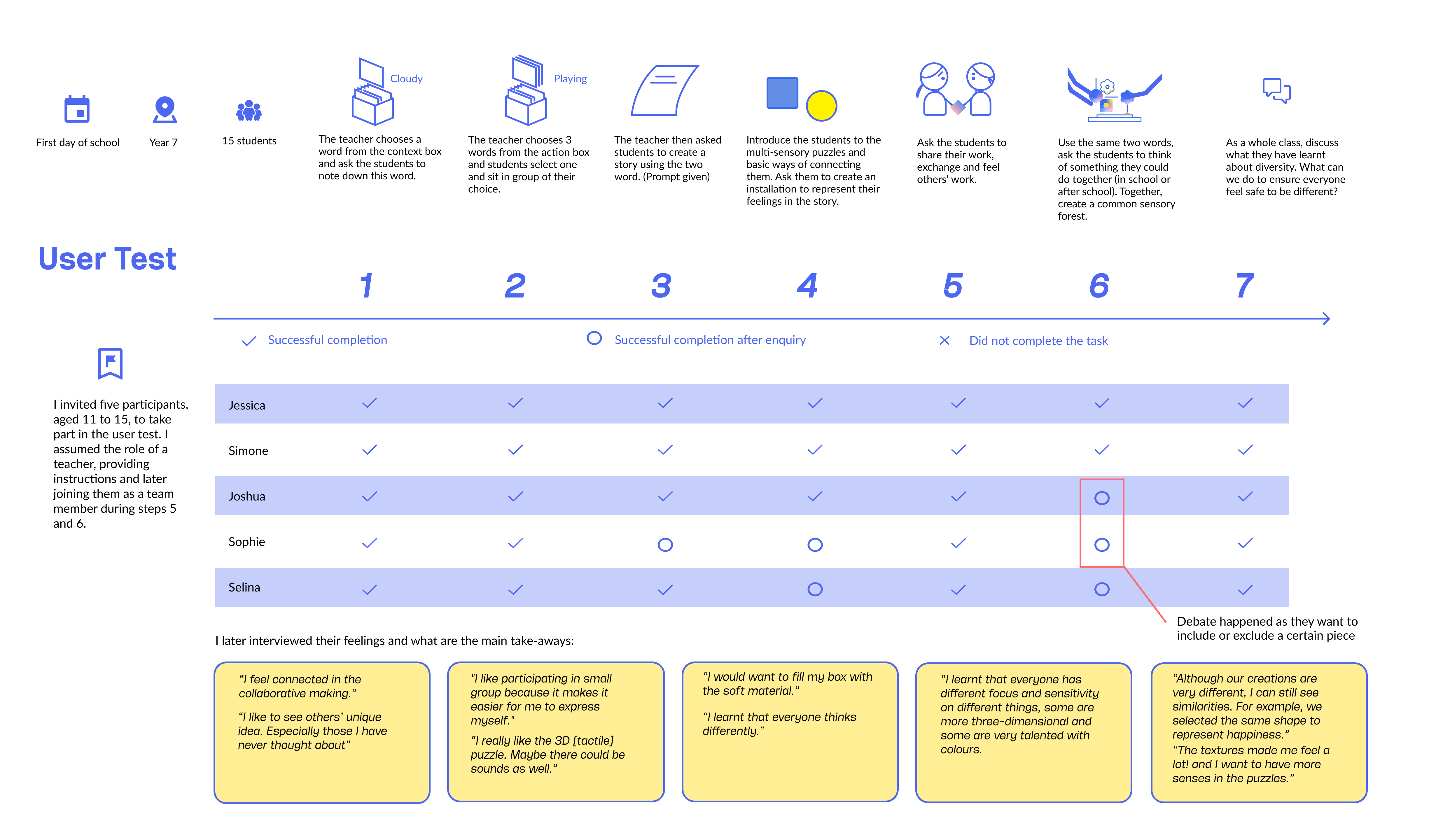
“I feel connected in the collaborative making.”
“I learnt that everyone thinks differently.”
“Although our creations are very different, I can still see similarities.”
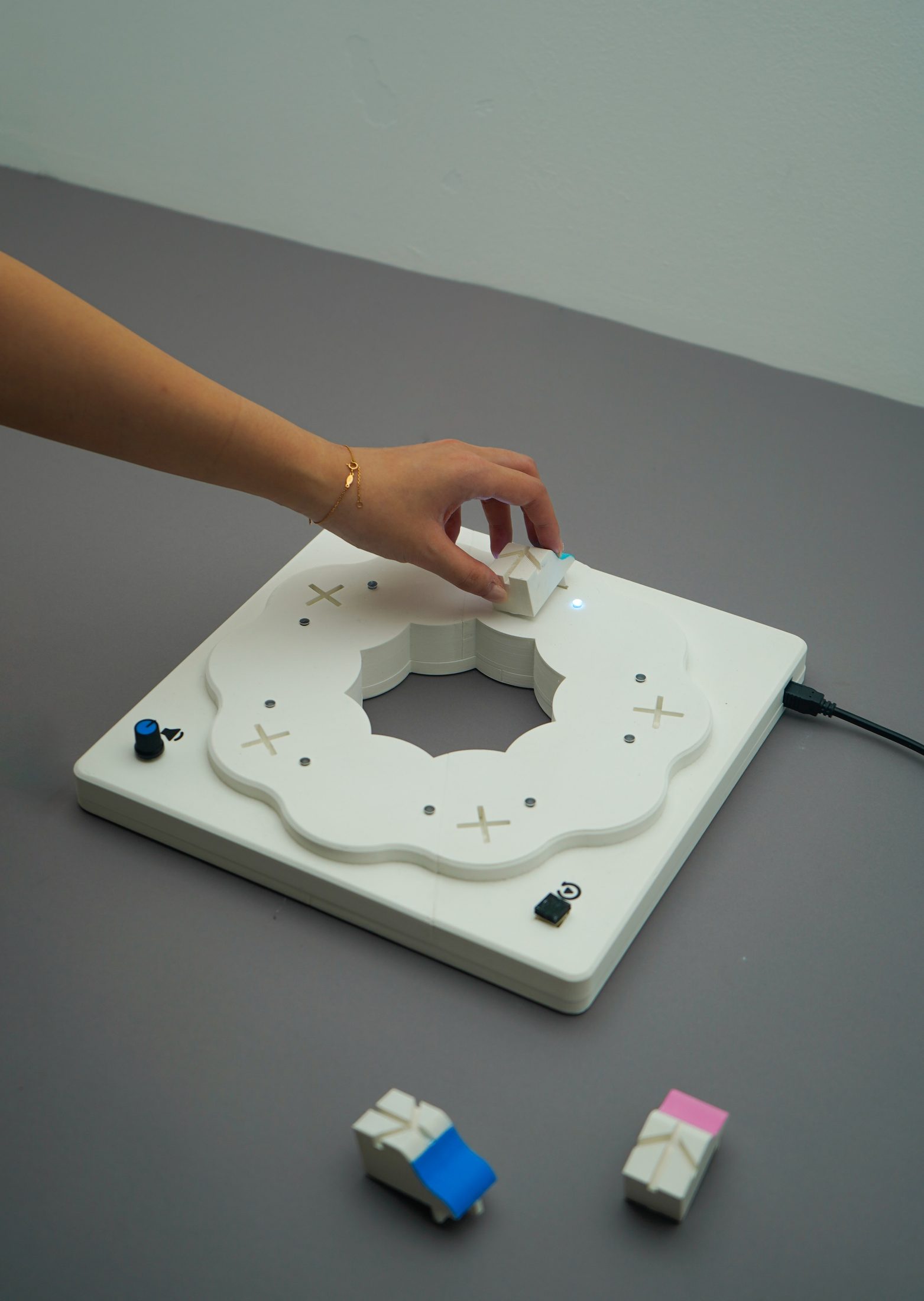
A durable classroom prototype combines RFID recognition, light, sound and physical fabrication.
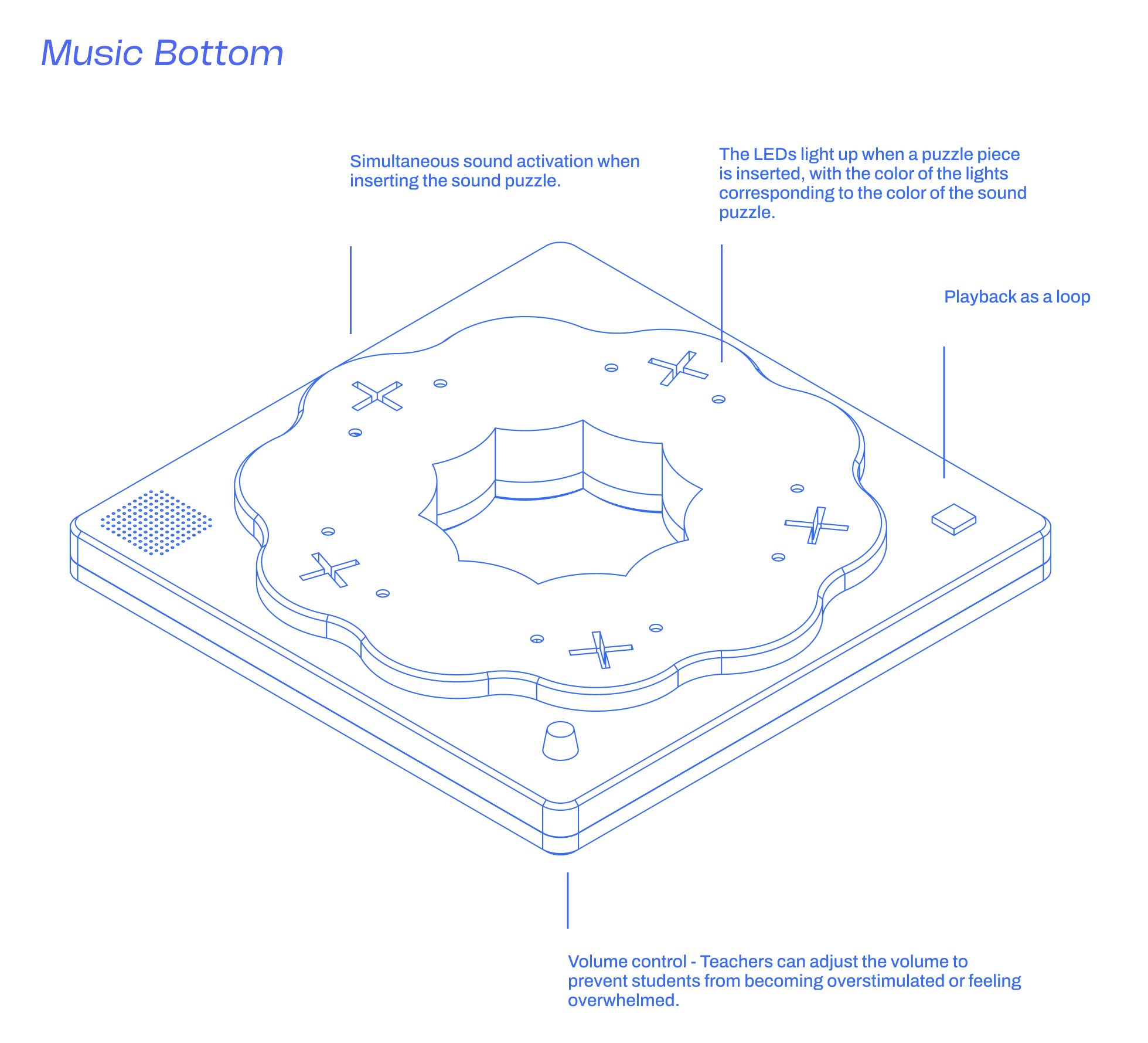
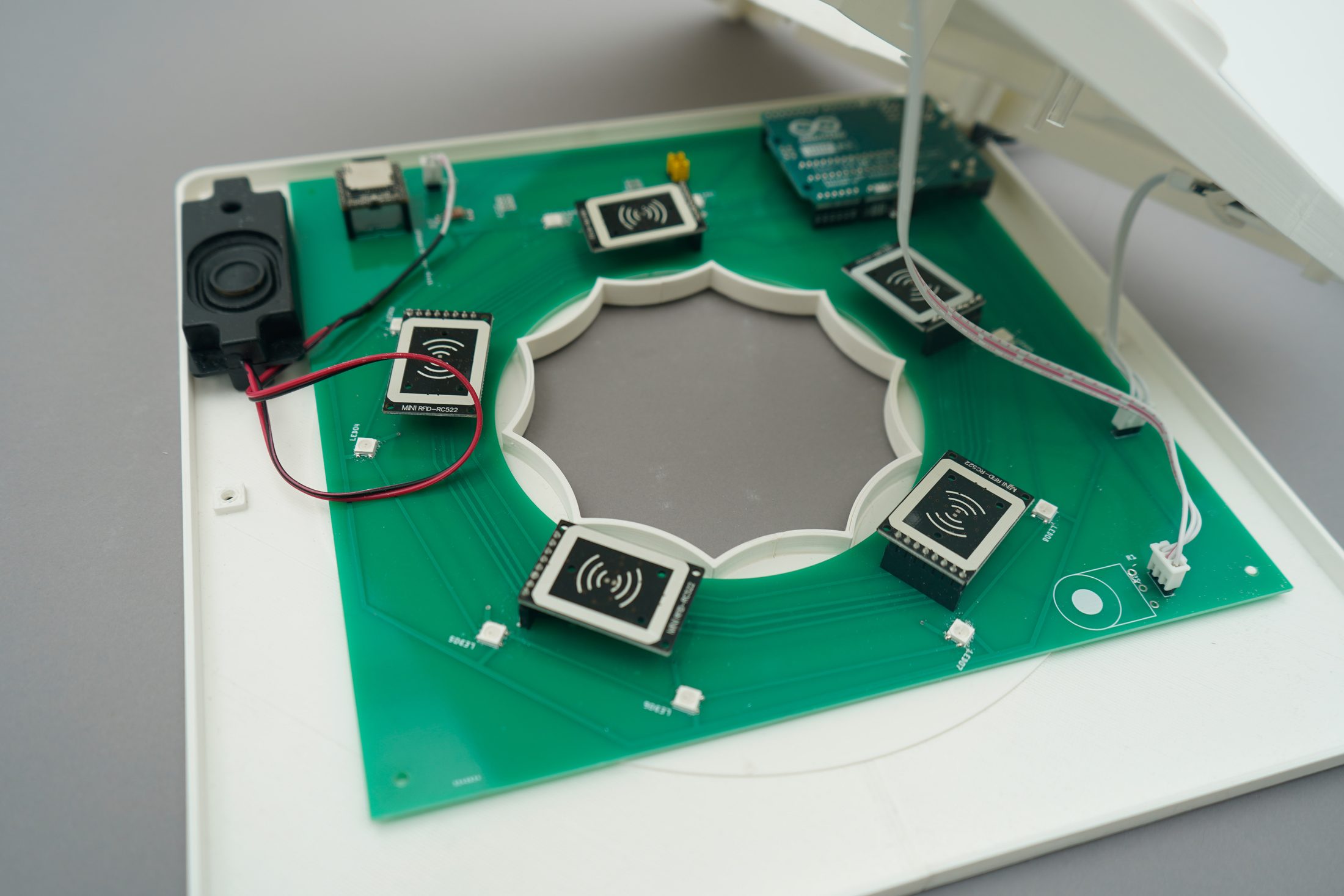
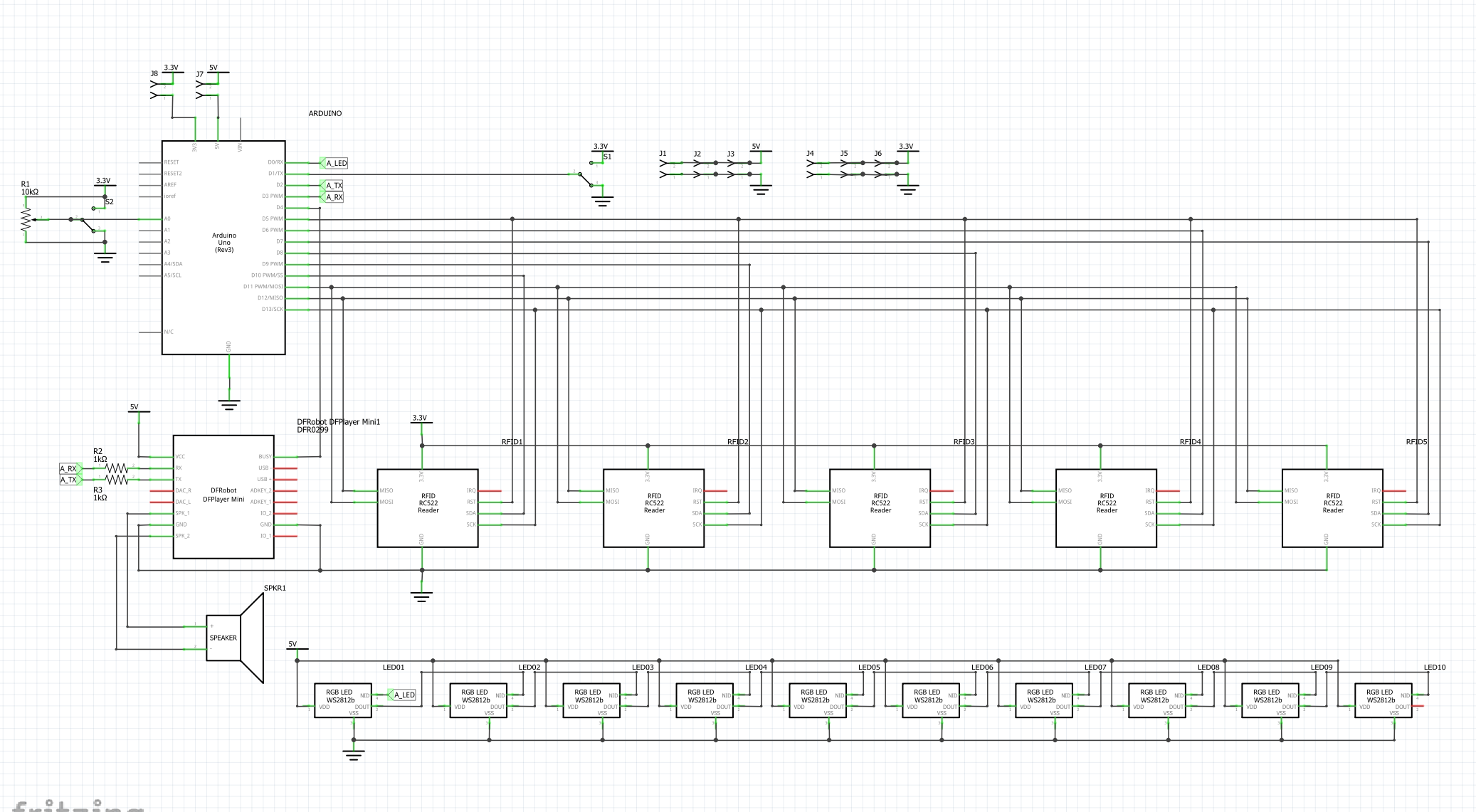
A playful, non-stigmatising tool for making difference visible, shareable and worth celebrating.
NeuroSpectrum changes the conversation from “How should this student fit in?” to “How can this group recognise and work with different ways of sensing, thinking and communicating?”