 Aurora Jiang
Wearable Device
Mixed Reality
Tangible Interaction
Individual Project
Mar. 2025 — Oct. 2025
HaptArm
Introduction
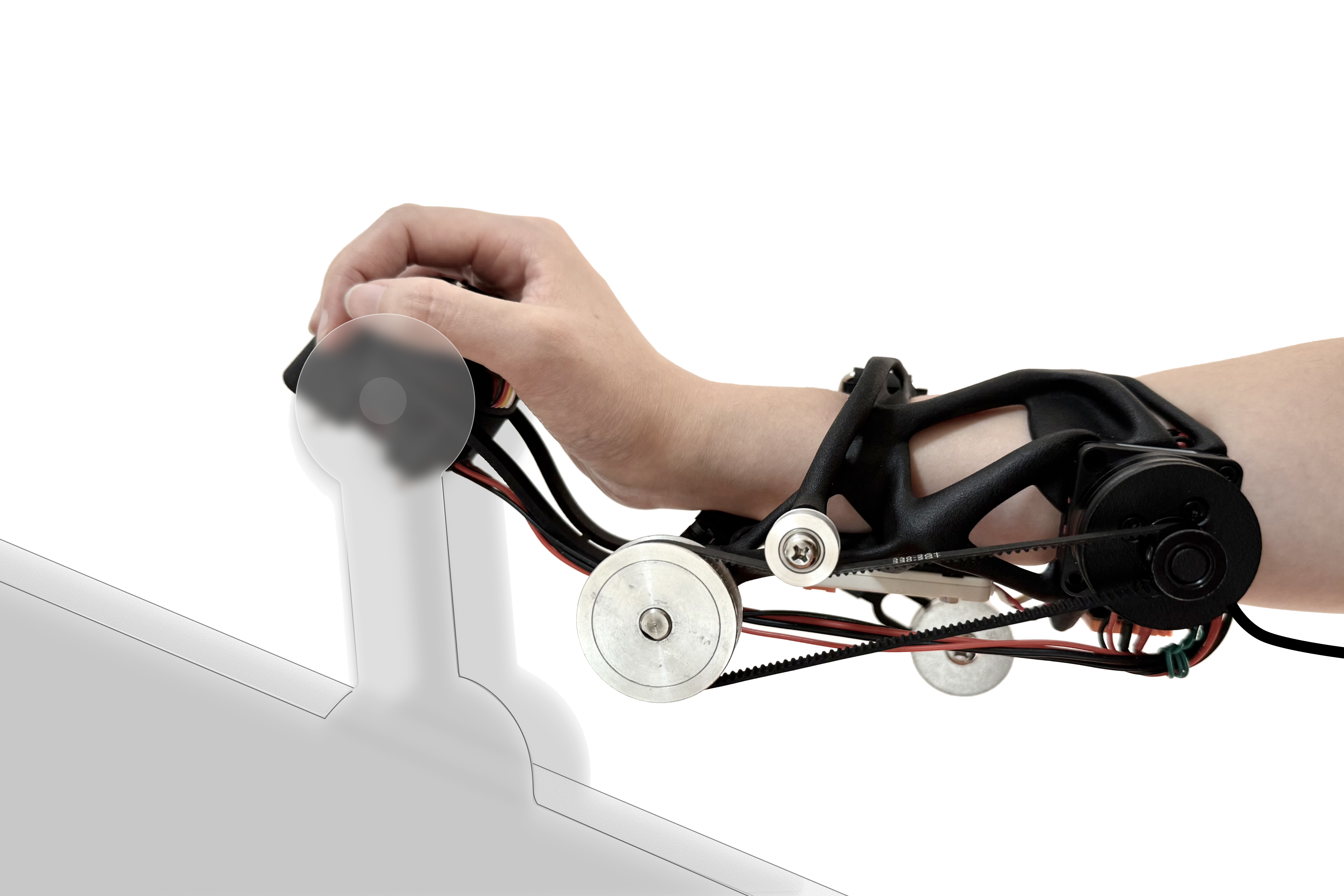
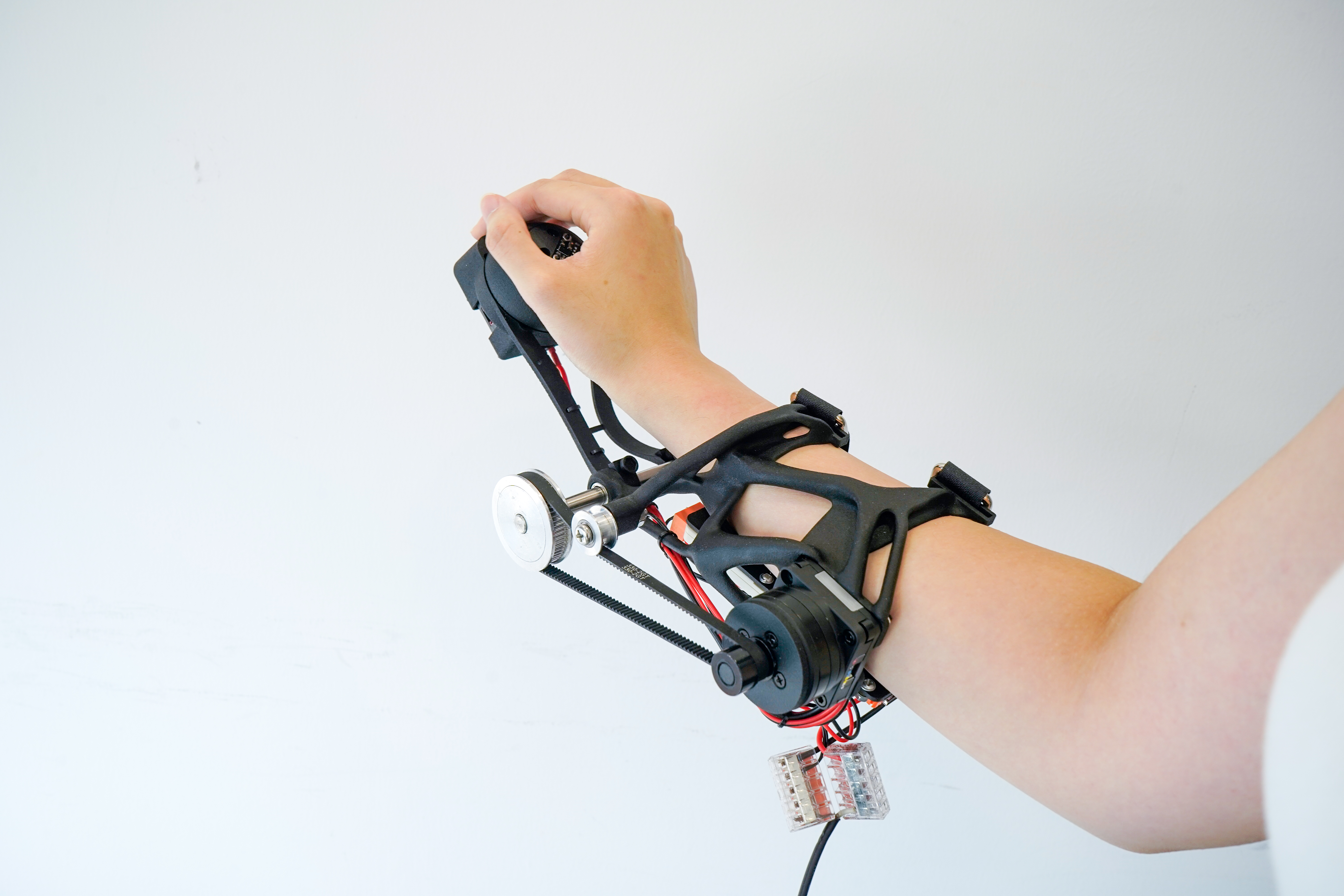
HaptArm is a wearable XR interface that turns virtual controls into tangible, expressive sensations.
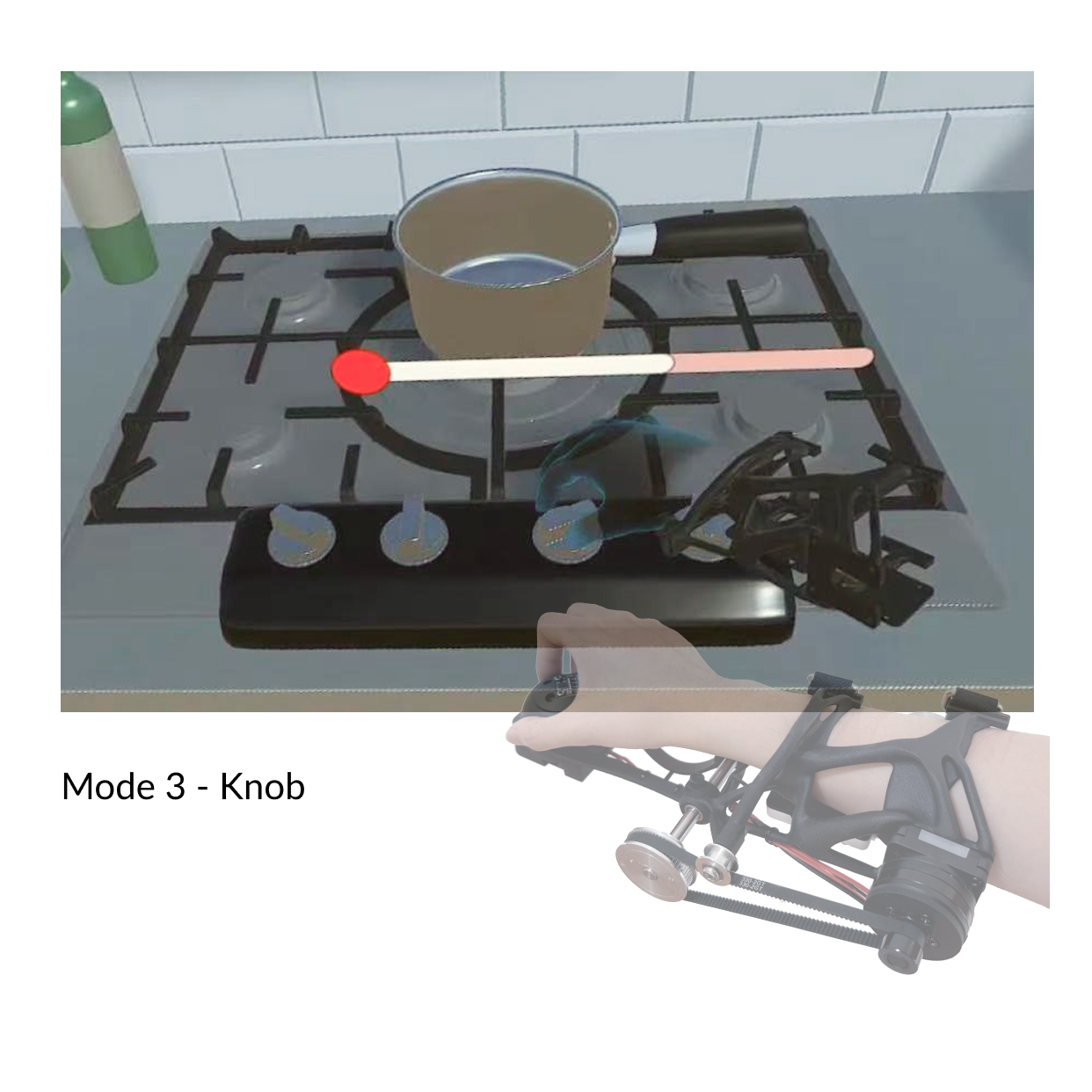
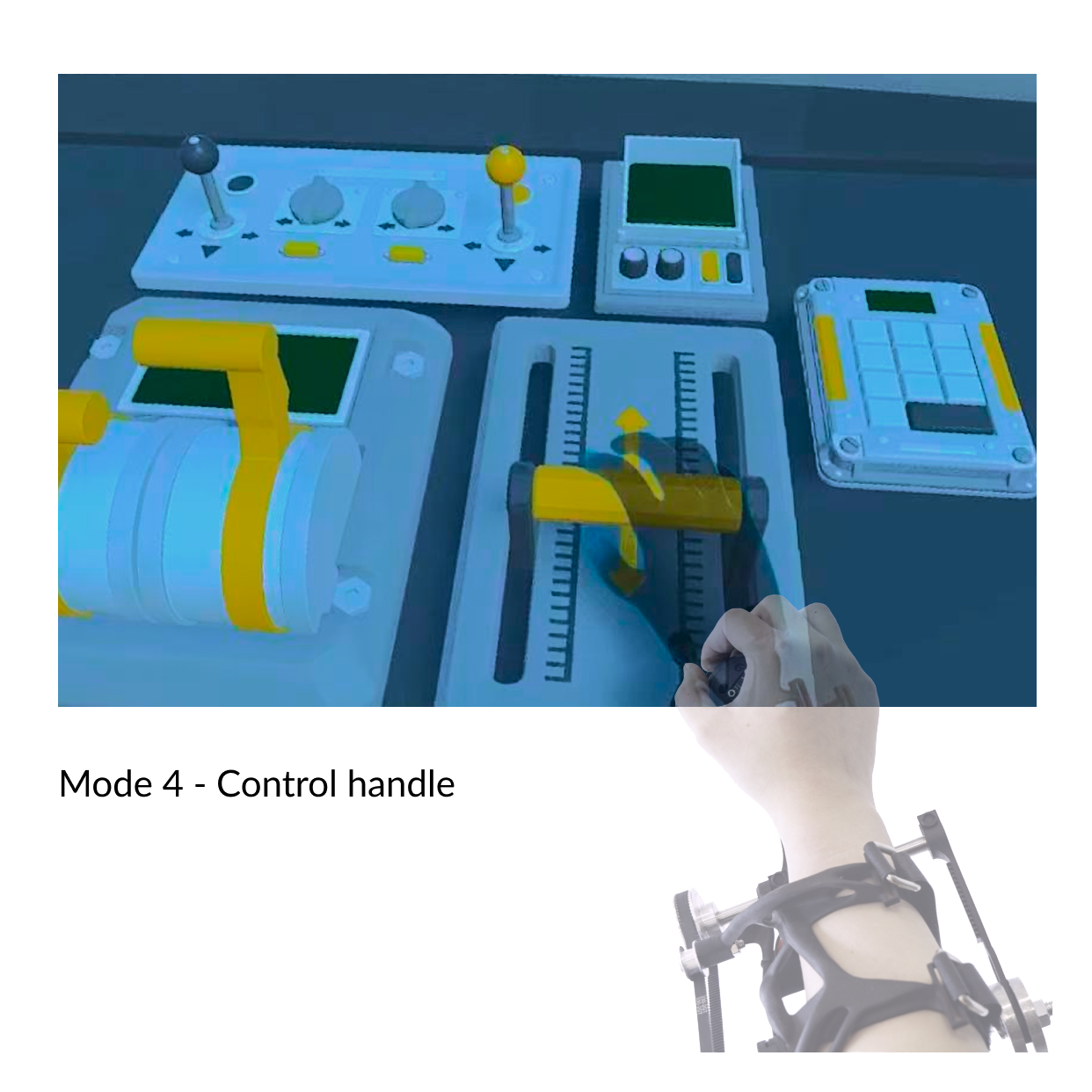
Two field-oriented controlled BLDC motors provide two degrees of freedom and customizable haptic patterns—from the sensation of pushing a rusted handle to the resistance of a virtual switch.
As both input interface and feedback device, HaptArm bridges physical and virtual experience. Force Image Schema informs metaphorical sensations that can communicate meaning, guide action and make digital controls more intuitive.
Rationale
Touch is a screen through which the body “sees” the world and understands meaning.
Existing haptic systems show that both actuated and simple mechanisms can simulate nuanced physical sensations. Yet most focus on reproducing resistance or texture.
This project asks how actuation might also encode meaning, guide behaviour and create new affordances for controls such as buttons, switches and handles.
How can actuated haptic feedback enhance users’ perception of affordance and intuitive control in virtual environments?
Key Concepts
Cybernetic Control Loop
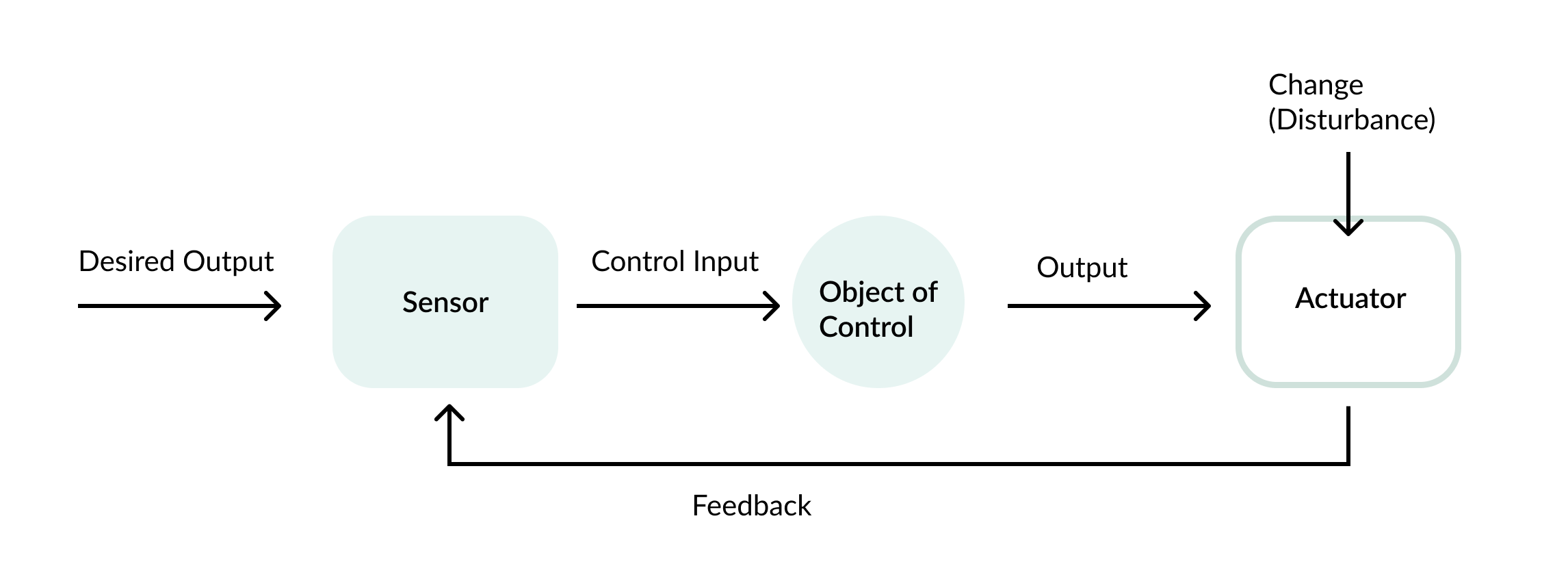
A closed-loop system lets input and output, sensor and actuator, continually calibrate one another for responsive and stable performance.
Force Image Schema
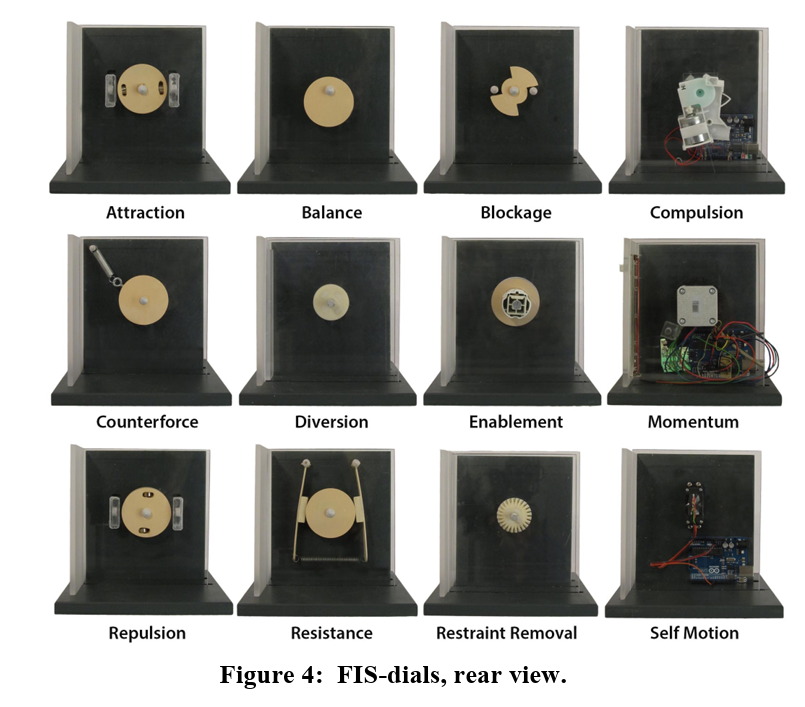
Force Image Schema can communicate messages, mimic environments and direct action—making it a useful design aid for differentiating virtual controls through touch.
System
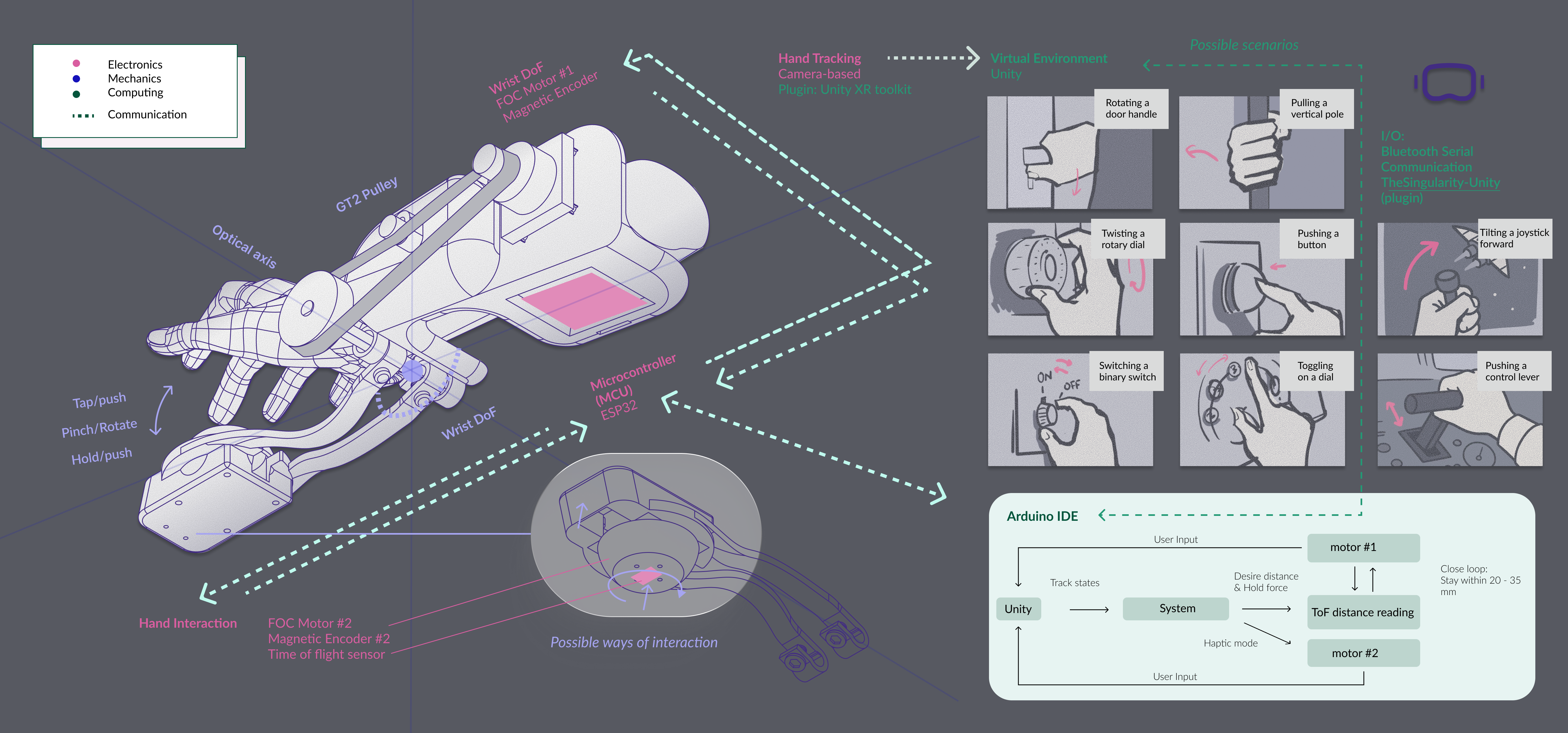
Two FOC motors maximize the range of control and feedback available across virtual scenarios.
Mechanics
Prototype 1.0
A GT2 pulley, MT6701 magnetic encoder and 2804 FOC motor validated the interaction and the mechanism’s ability to generate movement and haptic feedback.
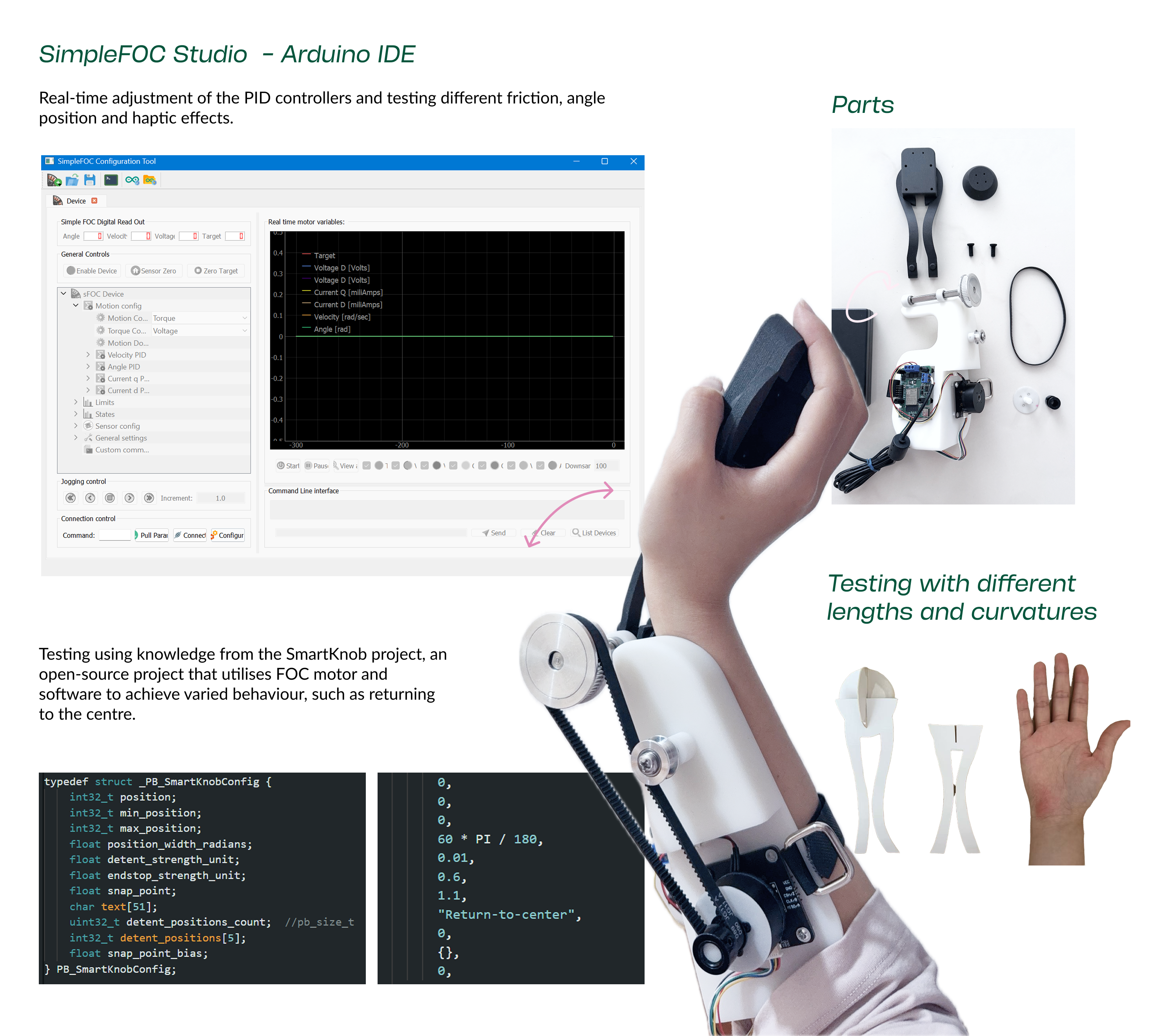
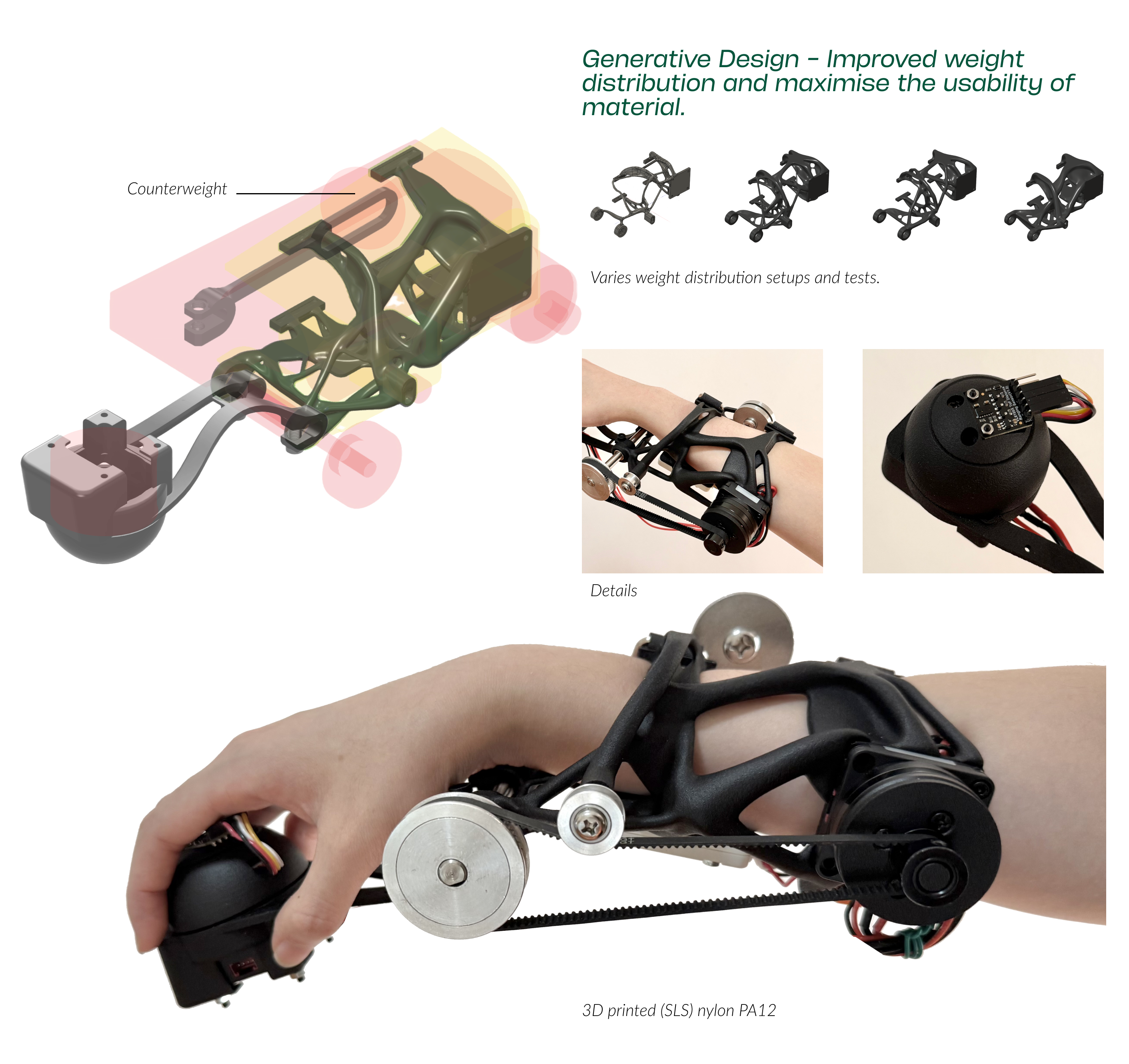
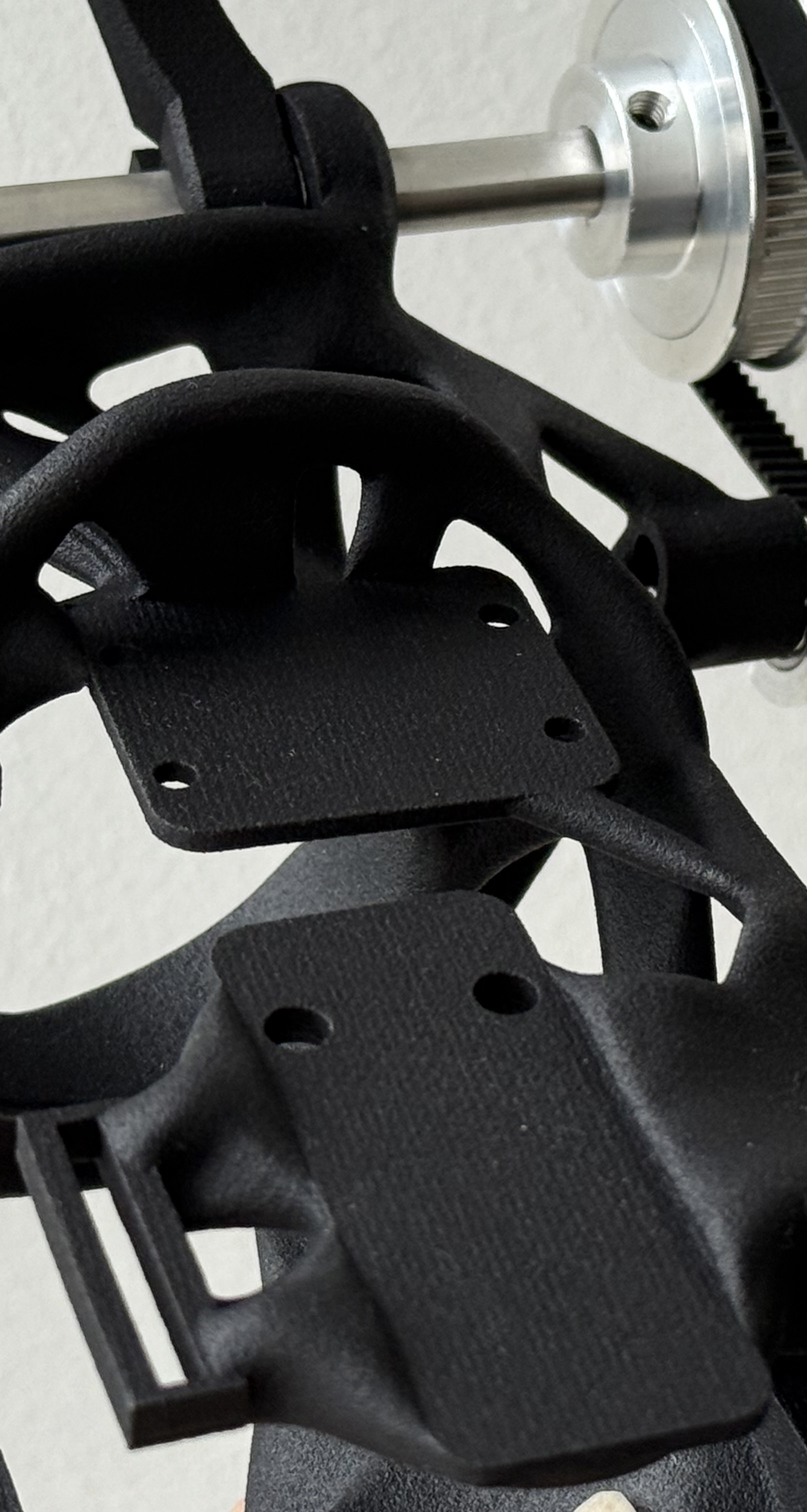
Prototype 2.0
The second iteration refines wearability, curvature, motor placement and the relationship between hand input and wrist feedback.
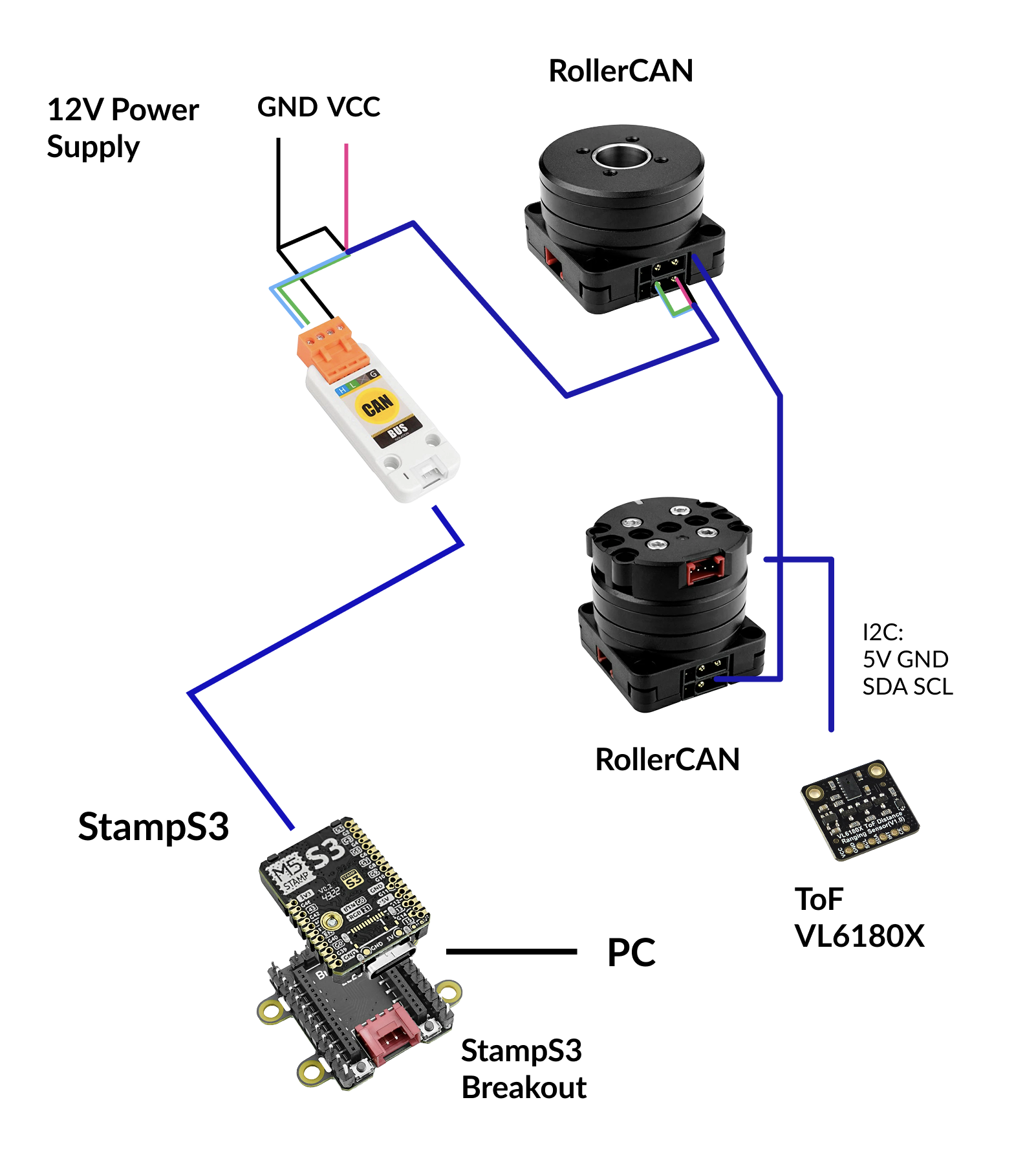
Circuit Diagram
The simplified electronic system uses the open-source M5Stack RollerCAN module for stable angle and torque control.
Haptic Patterns
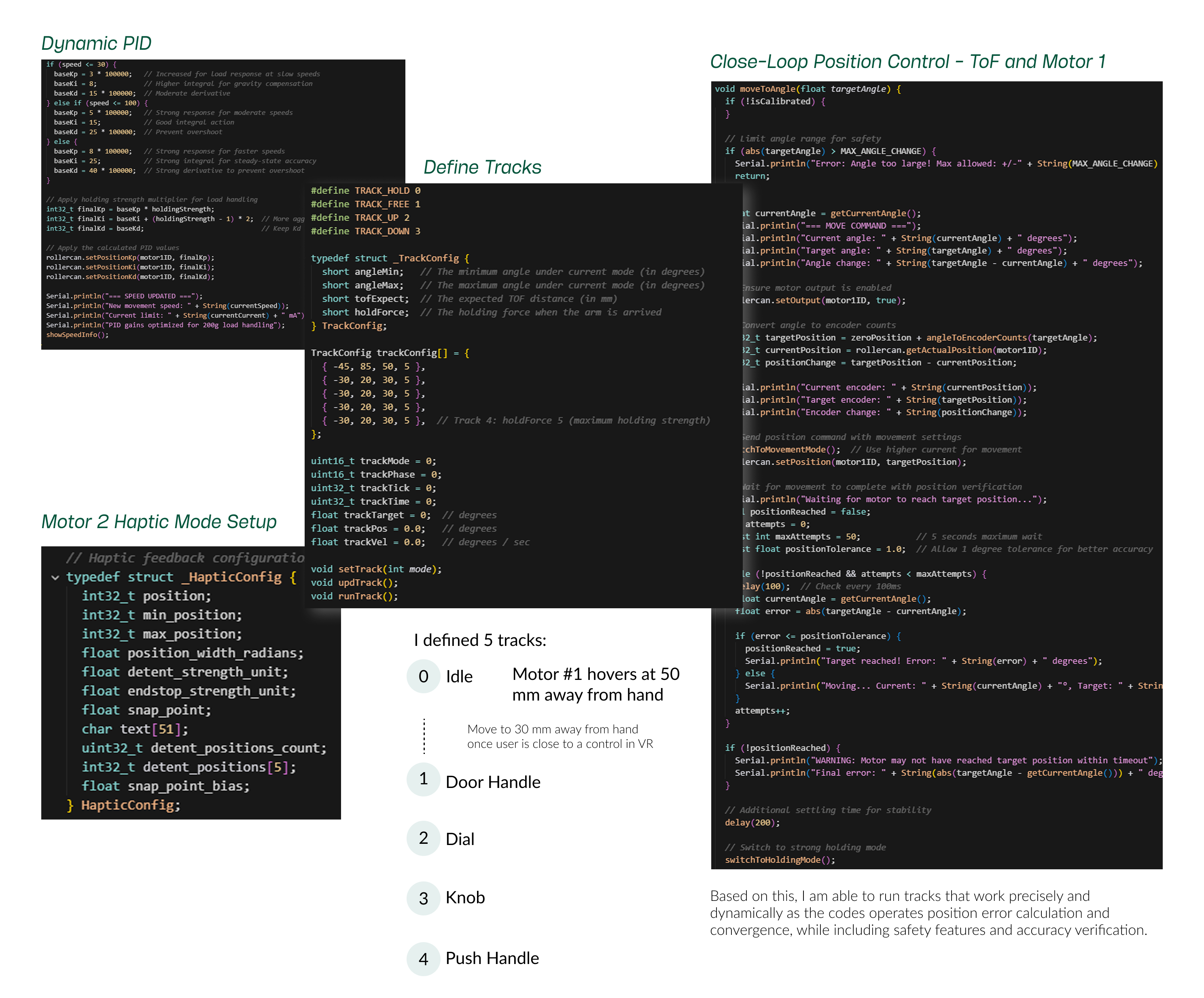
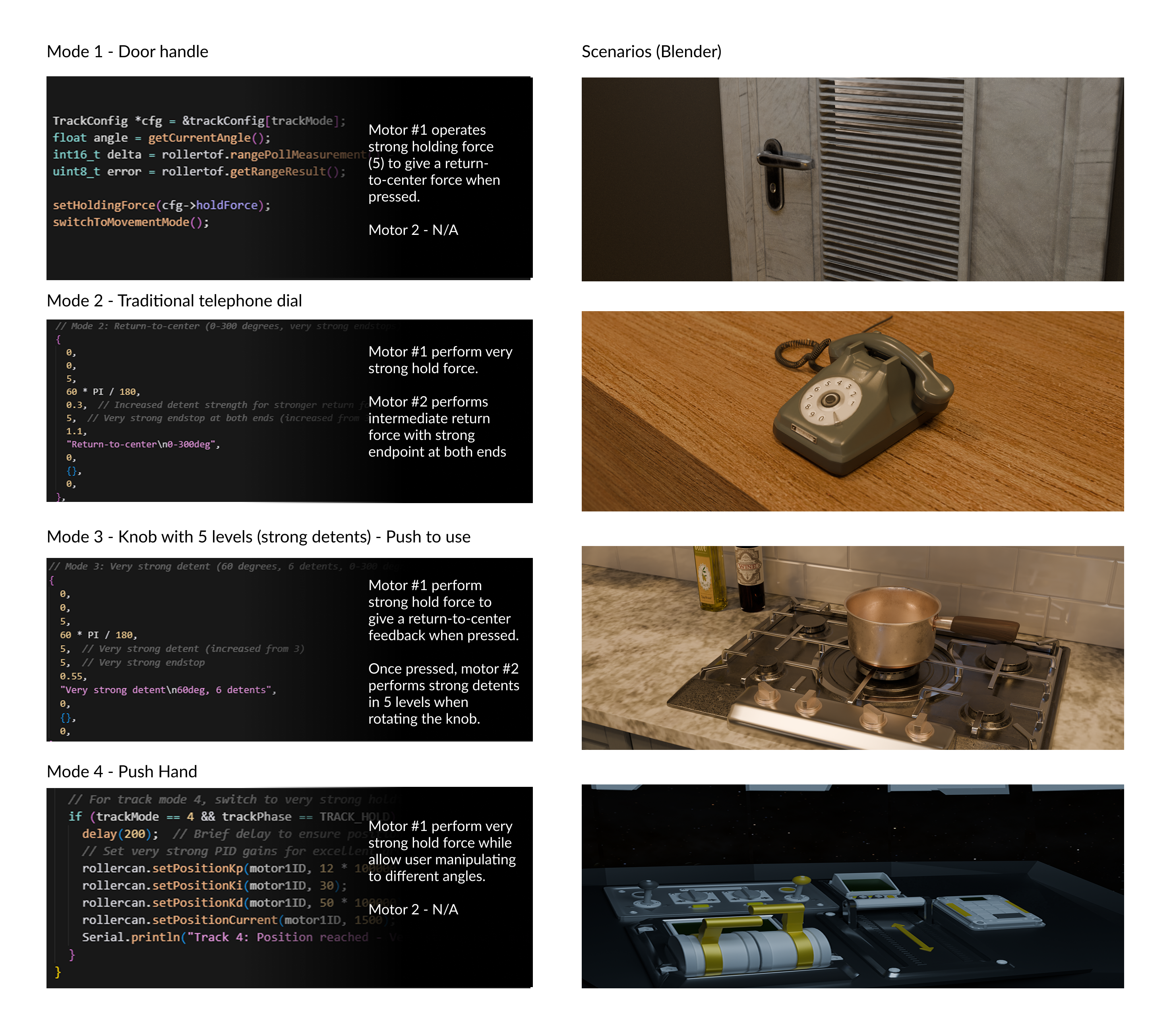
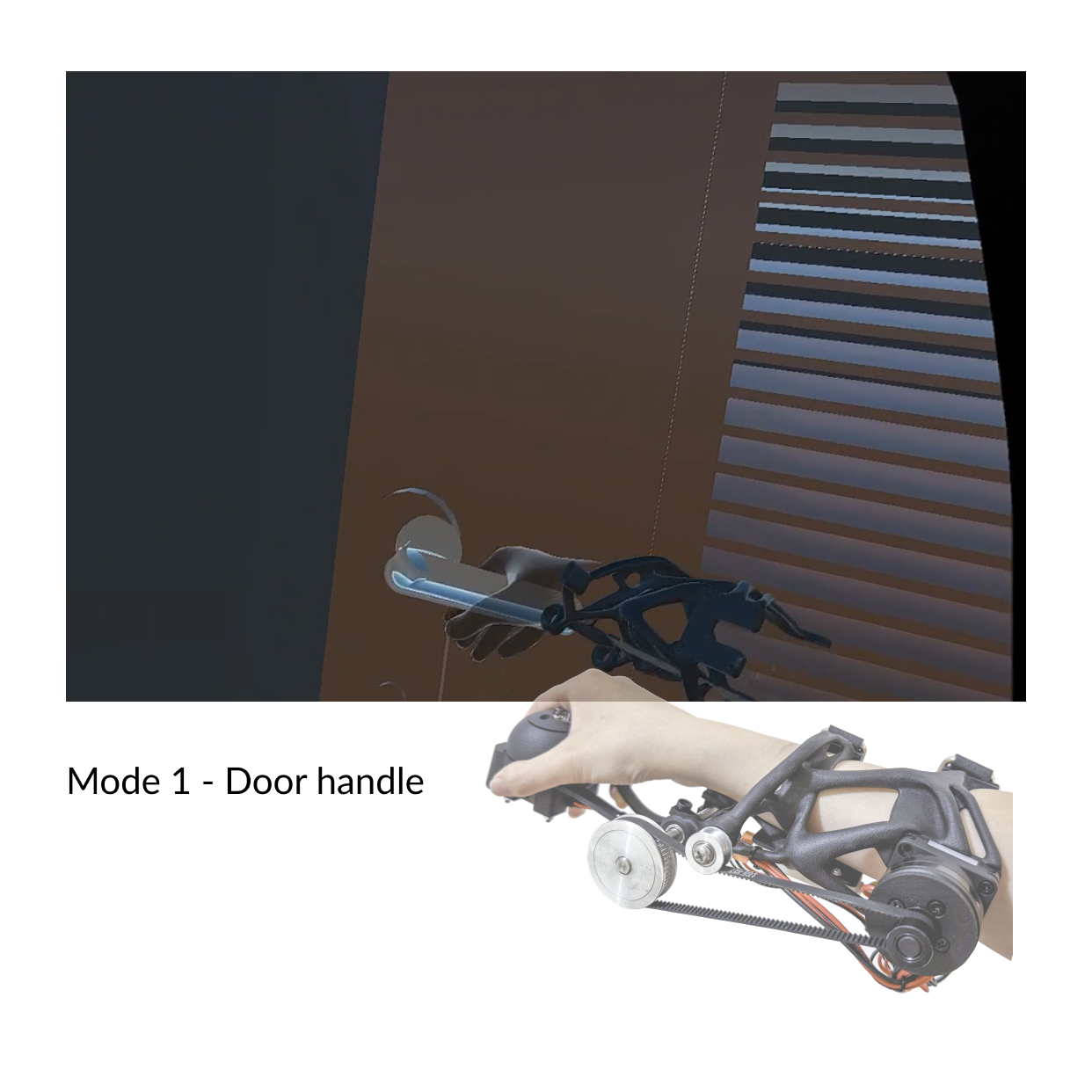
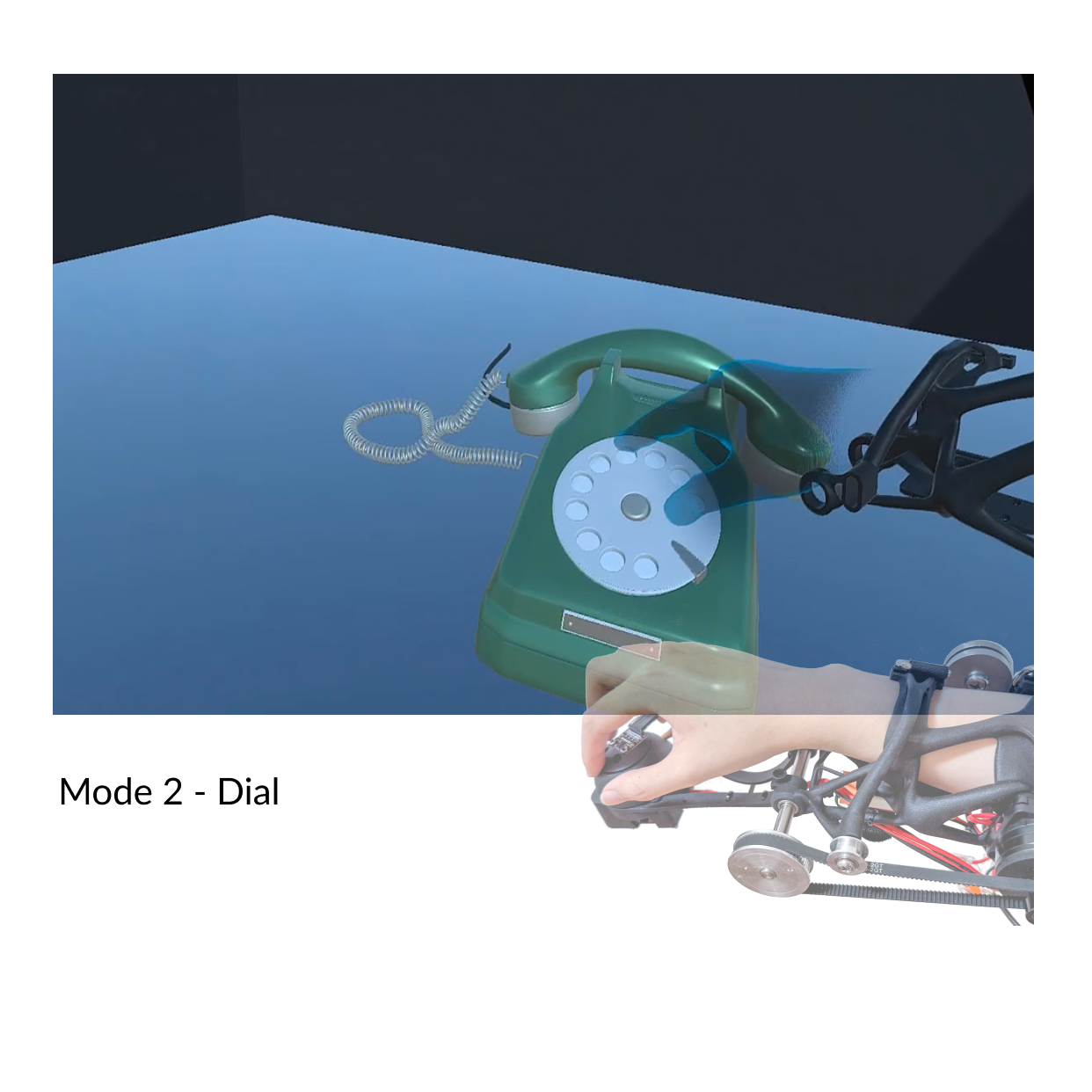
Scenario-based code translates virtual states into distinct tactile messages.
Reflection
The prototype validates the system; its next phase is to understand how different users interpret its tactile language.
Future testing will examine how effectively the device creates affordances and guides interaction across a wider range of people and virtual contexts.
The system may support people who rely on non-visual controls, while reducing the learning curve when users first encounter unfamiliar virtual interfaces.
Citation
- Fashimpaur, J. et al. (2023). Investigating wrist deflection scrolling techniques for extended reality. CHI ’23, Article 386.
- Hurtienne, J. et al. (2015). Comparing pictorial and tangible notations of force image schemas. TEI ’15, 249–256.
- Lucas VRTech (2022). I built a VR haptic glove for $50!
- Paeng, M. (2022). Innovation Design Engineering, Royal College of Art.
- Papetti, S., Larrieux, E. and Fröhlich, M. (2023). The TouchBox MK3. ICMI ’23 Companion, 302–305.
- scottbez1 (2022). DIY haptic input knob: BLDC motor + round LCD.
- Sinclair, M. et al. (2019). CapstanCrunch: A haptic VR controller with user-supplied force feedback. UIST ’19, 815–829.