 Aurora Jiang
Participatory design for multispecies cities
COMMON
SKY

Introduction
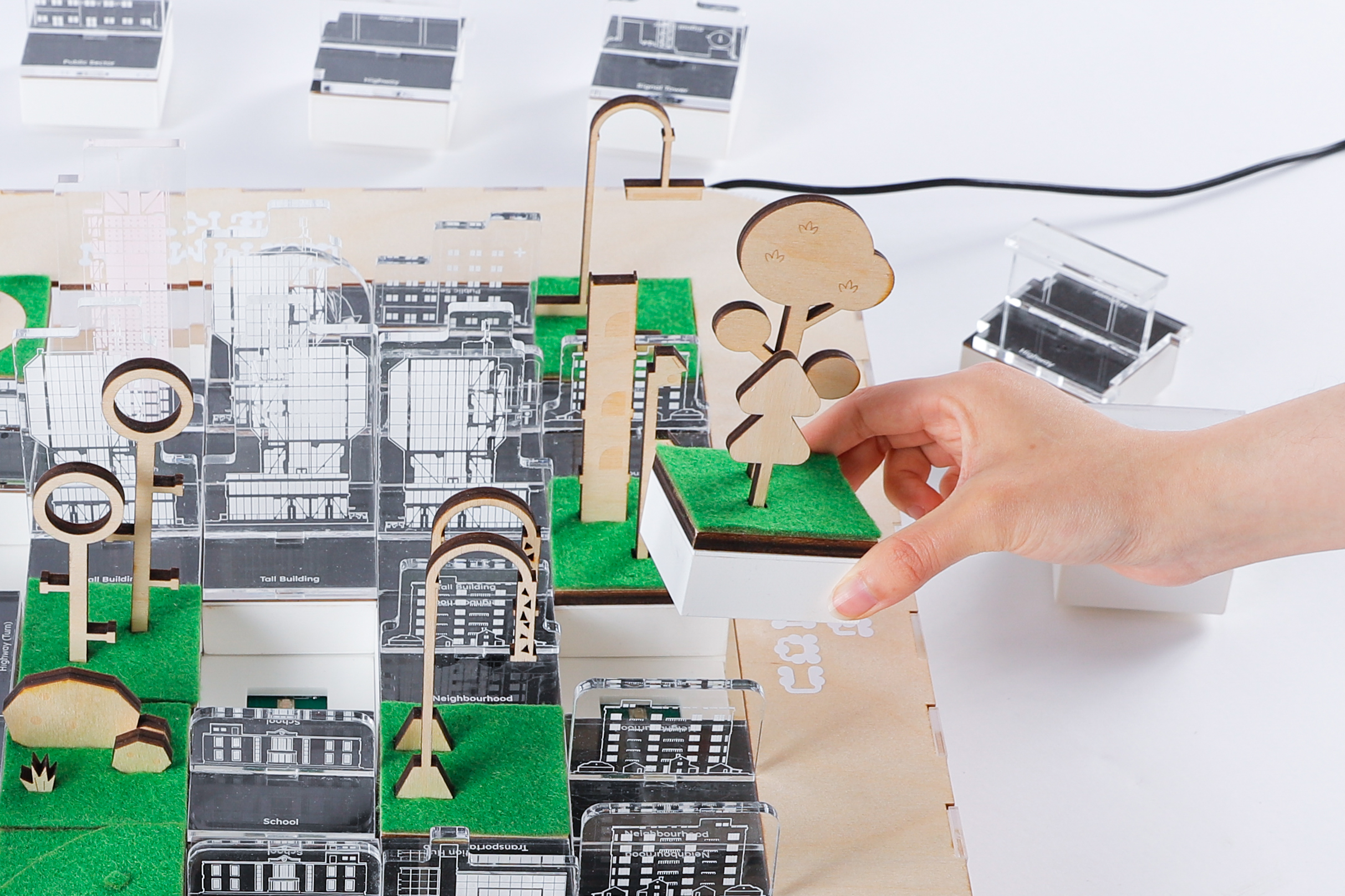
Centred on bird–human coexistence, Common Sky uses interactive, participatory design to reveal how urban planning impacts biodiversity.
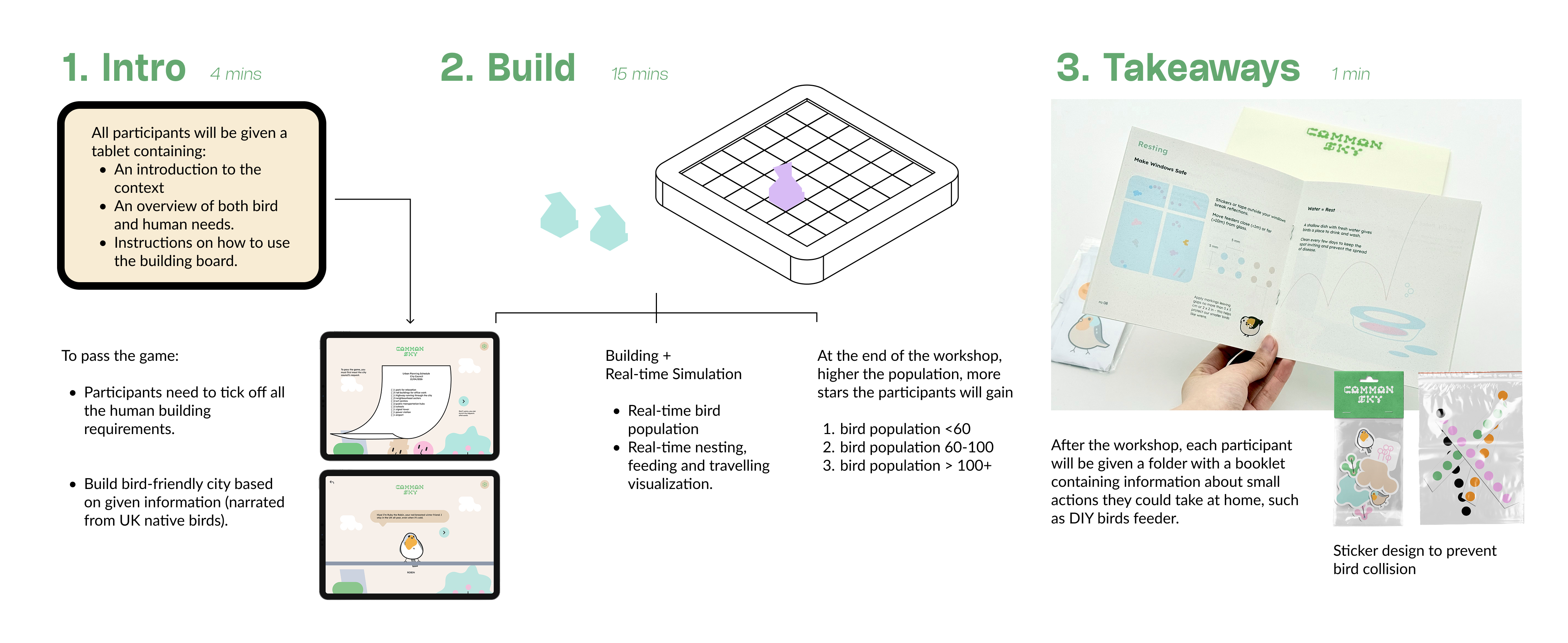
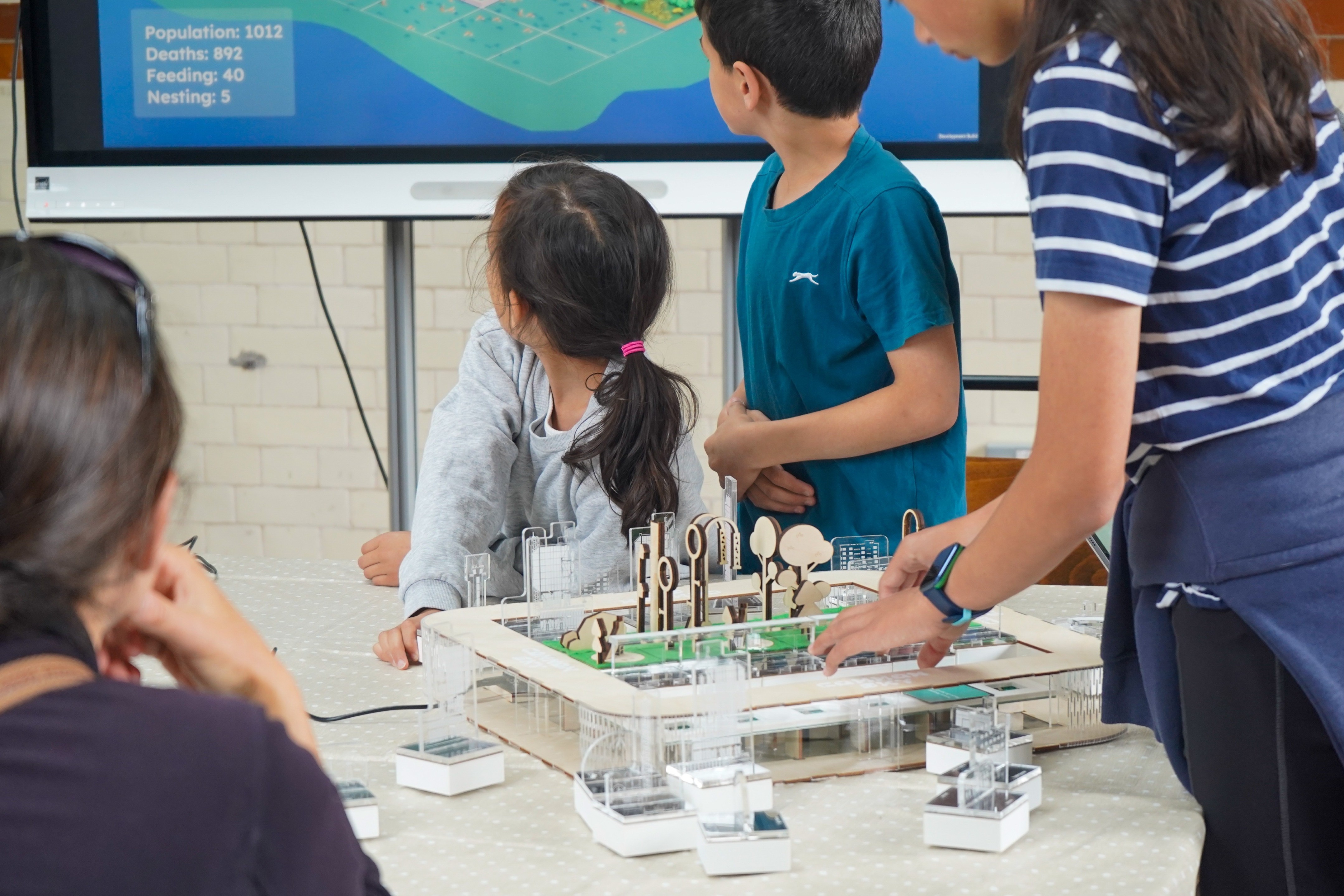
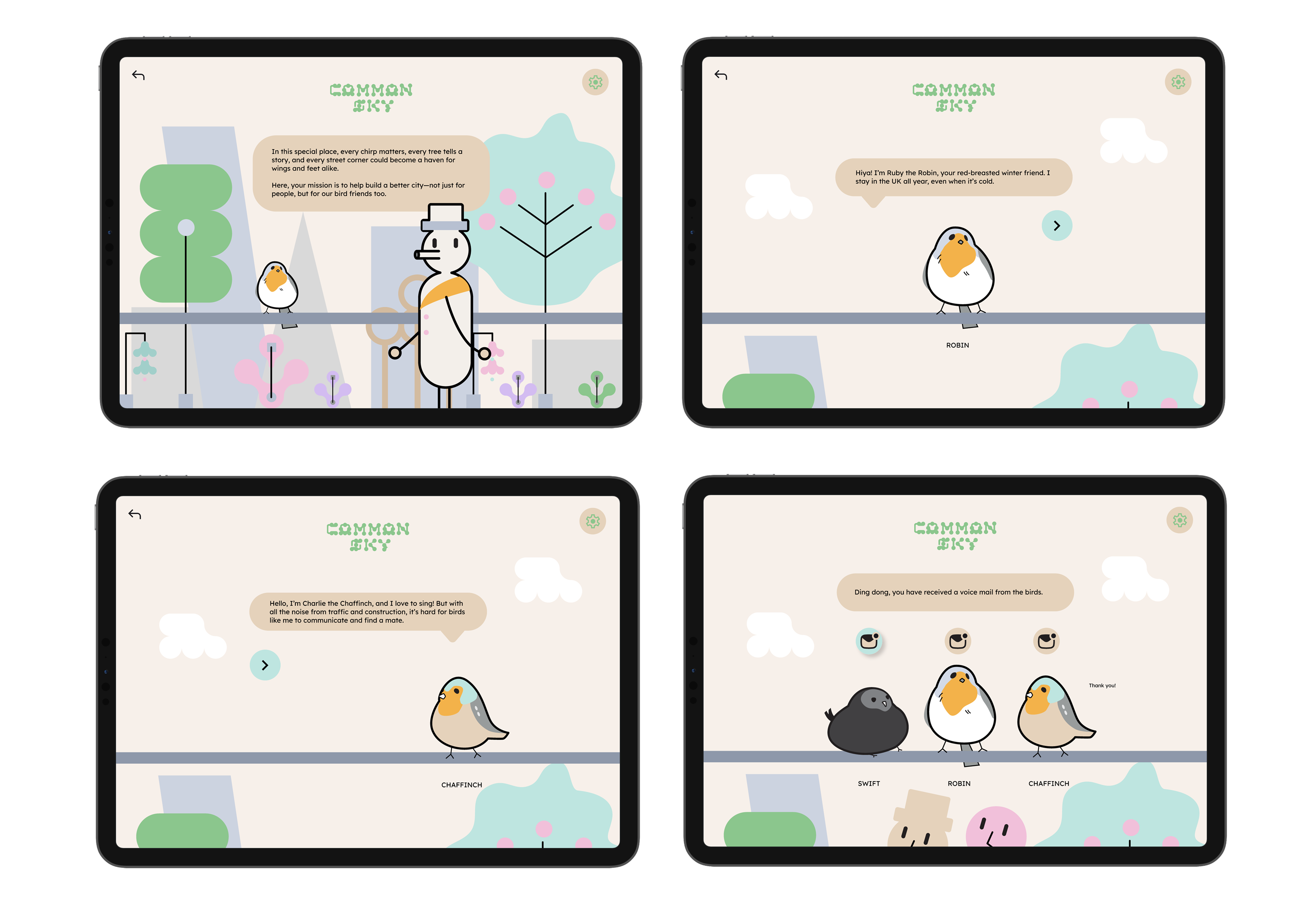
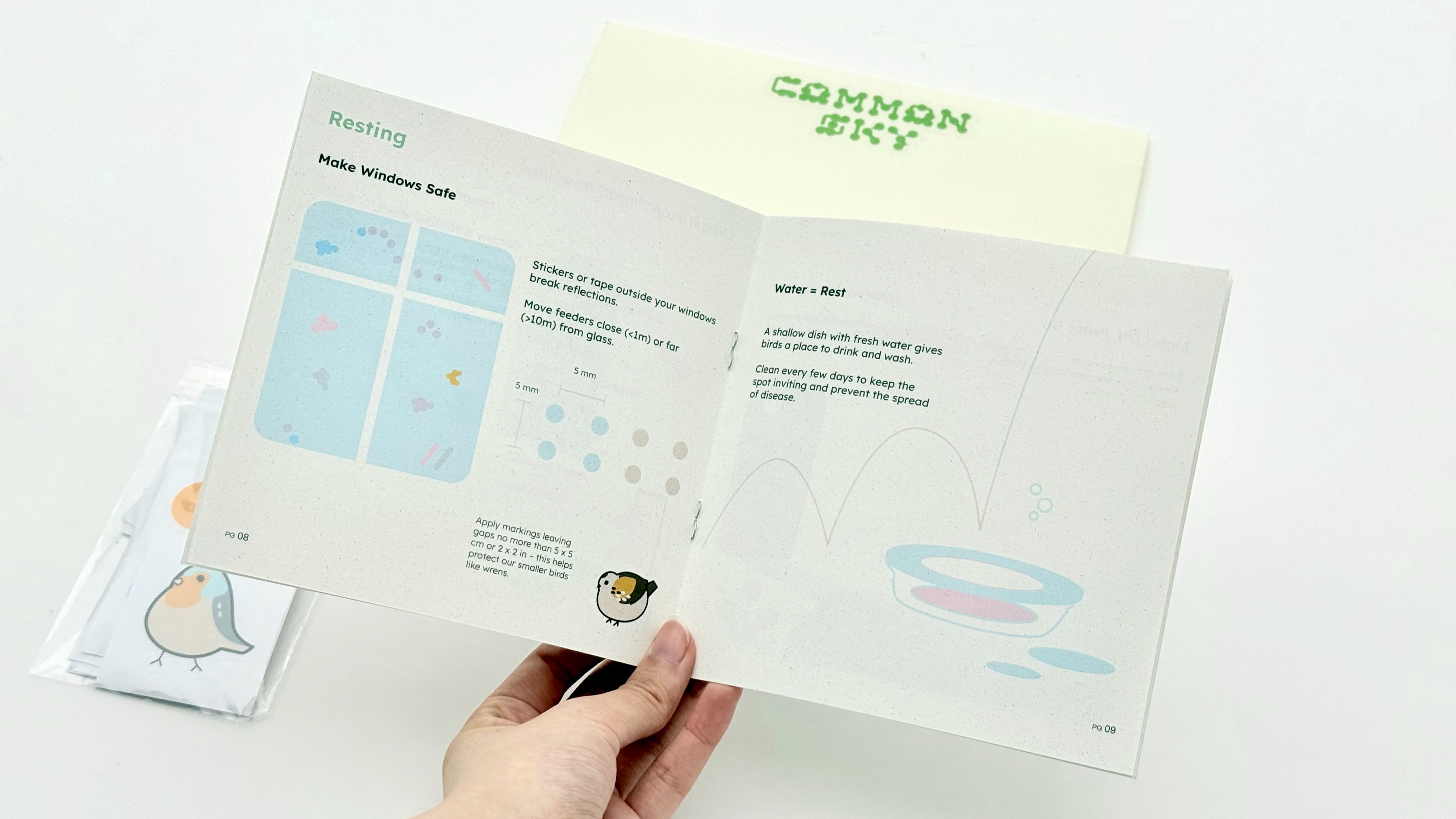
Through an introductory tablet, an interactive building board and a takeaway folder, participants move from understanding to action — engaging in playful yet informed decisions.
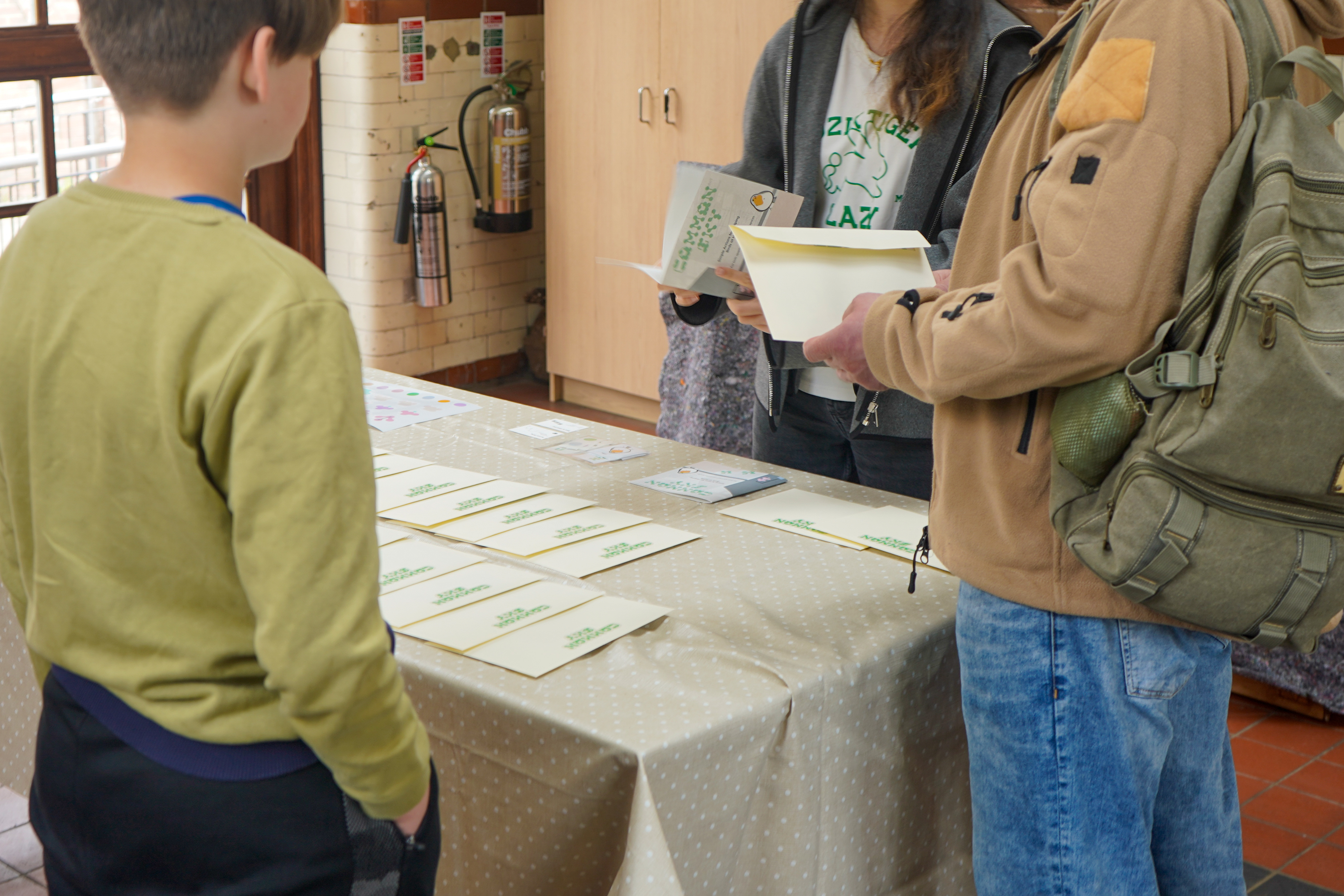
In collaboration with London Wildlife Trust, I hosted the workshop at Walthamstow Wetlands in May and June 2025. The framework is universal and can be adapted to other educational environmental contexts.
Rationale
To raise public awareness about the importance of coexistence between birds and humans through participatory, climate-positive design.
Urban environments have long prioritised human convenience, often overlooking ecological impact on non-human inhabitants. Glass collisions, artificial lighting and habitat destruction contribute to millions of bird fatalities annually.
Existing architectural, product and legal solutions can reduce collisions. The primary challenge is public awareness: many people do not realise the scale of the issue or how deeply connected birds are to human life.
Solution
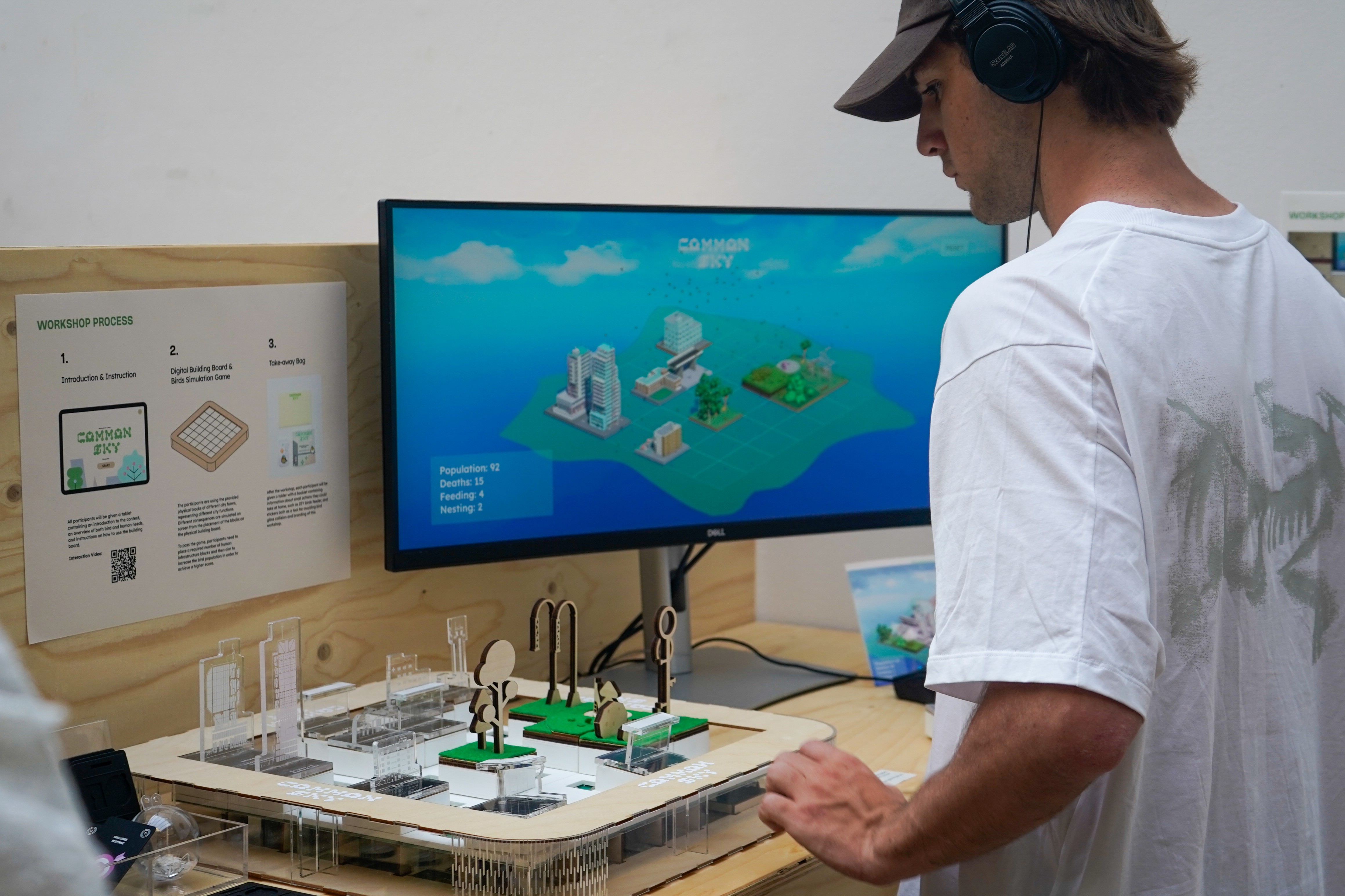
Workshop at Walthamstow Wetlands
Participants collectively shape a city while observing how each decision changes the lives of urban birds.
Iteration & Construction
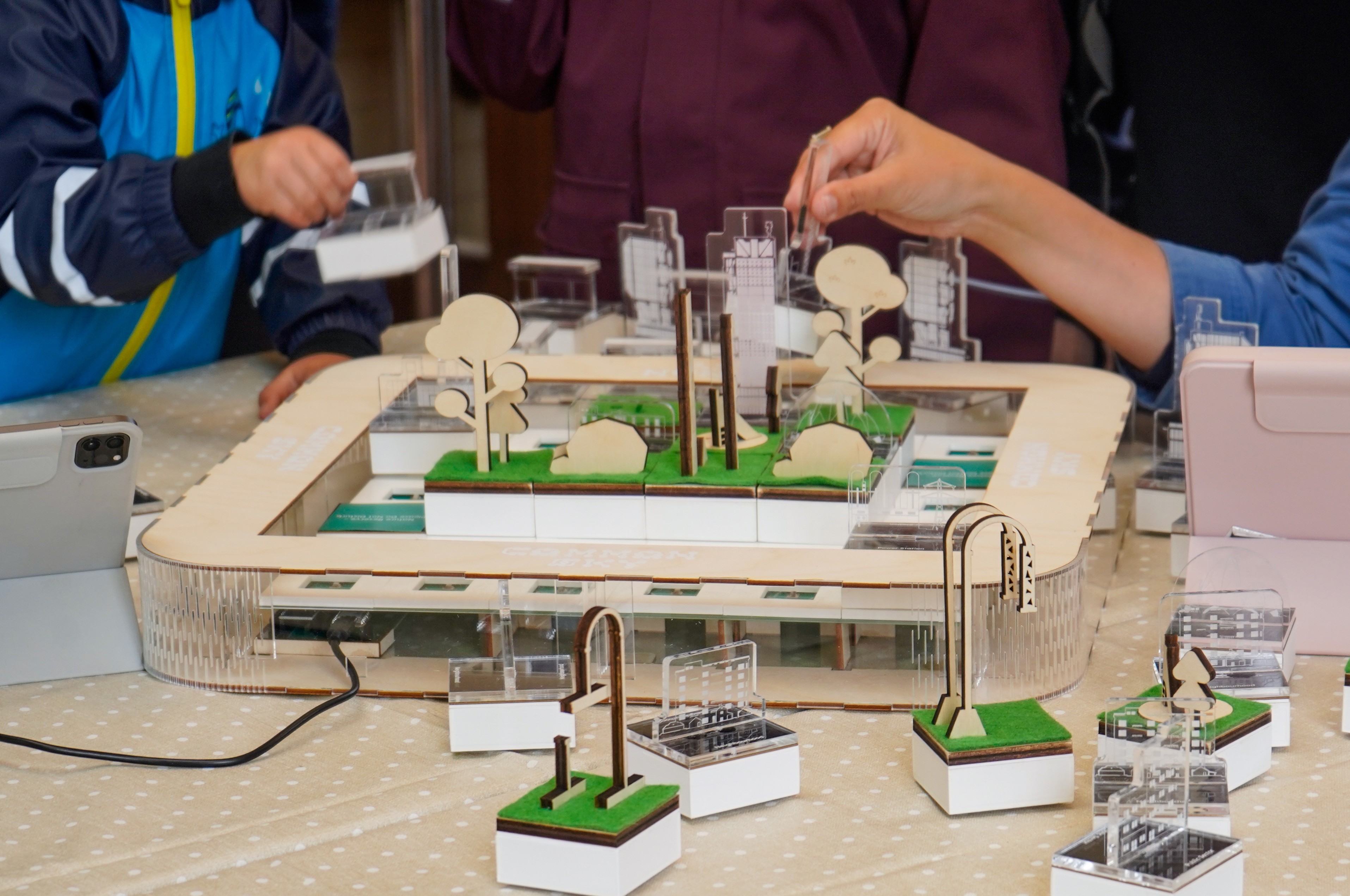
Collaborative brainstorm and user test
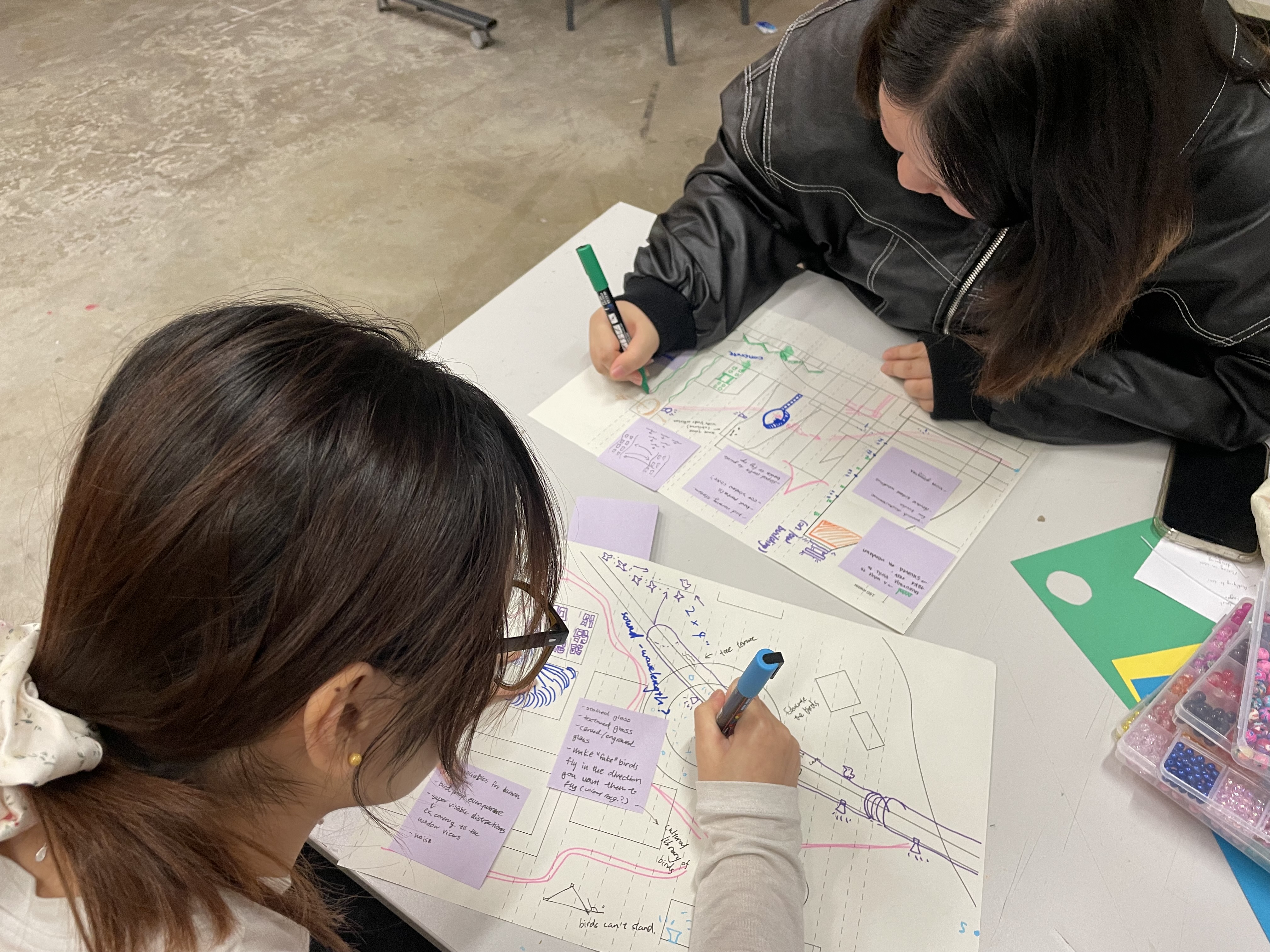
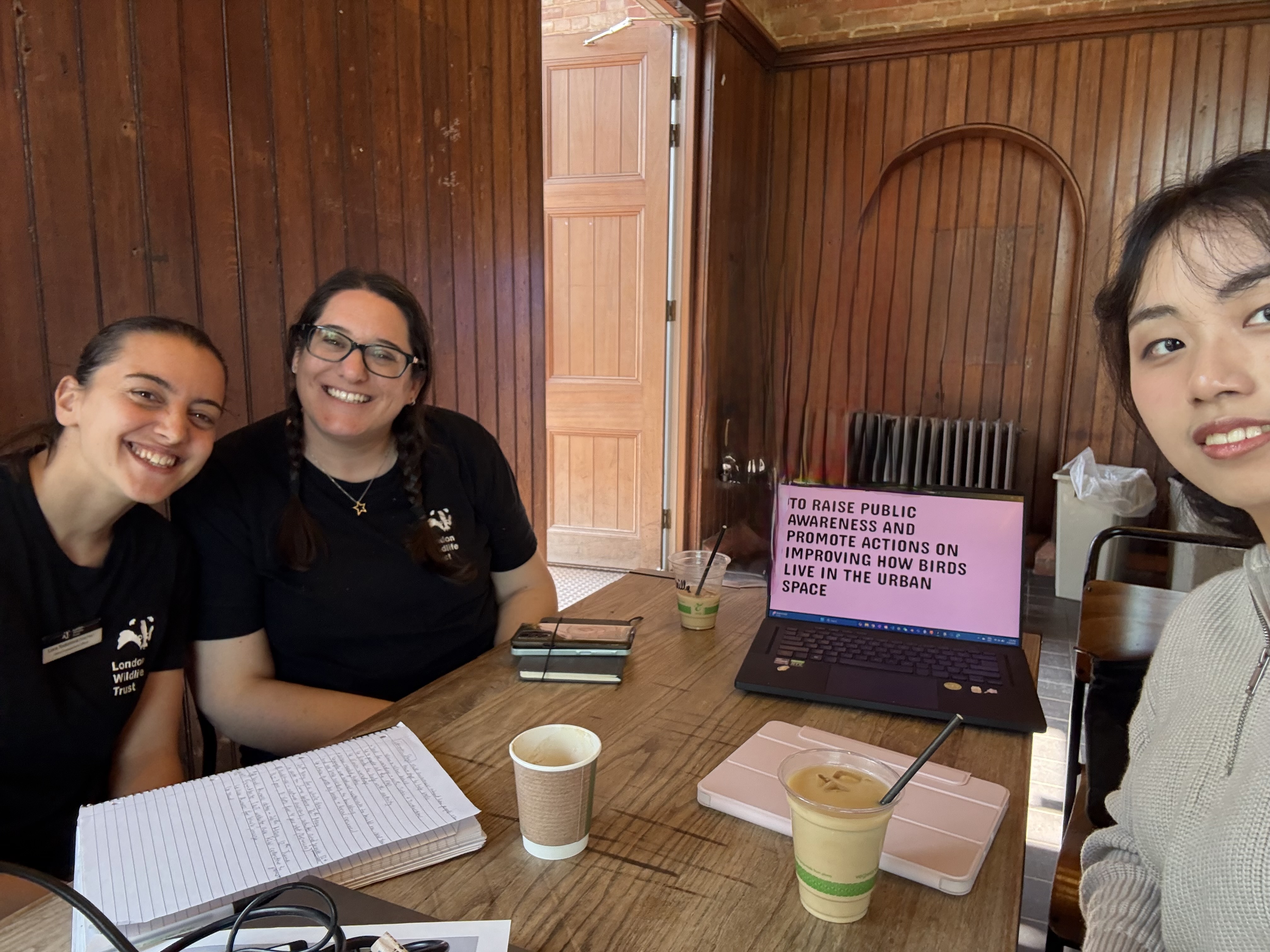
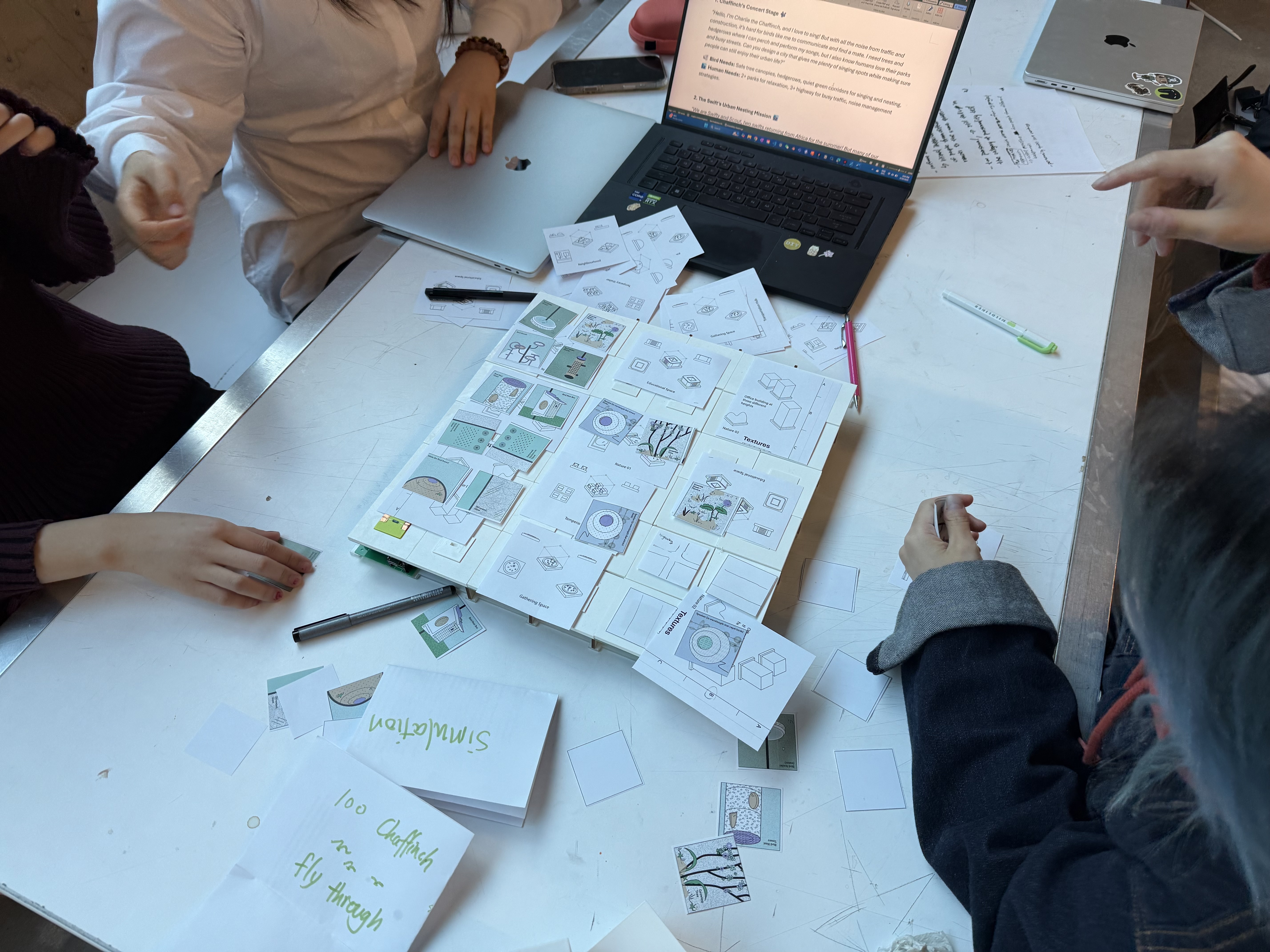
Participants naturally began to consider birds’ perspectives, showing increased care and surprise at issues they were previously unaware of.
- Combine action cards and architectural types into one set of interactive blocks to simplify the experience and reduce the learning curve.
- Provide small take-home actions and tools that extend the workshop into longer-term real-world impact.
- Use consistent visual elements throughout the system to strengthen emotional connection.
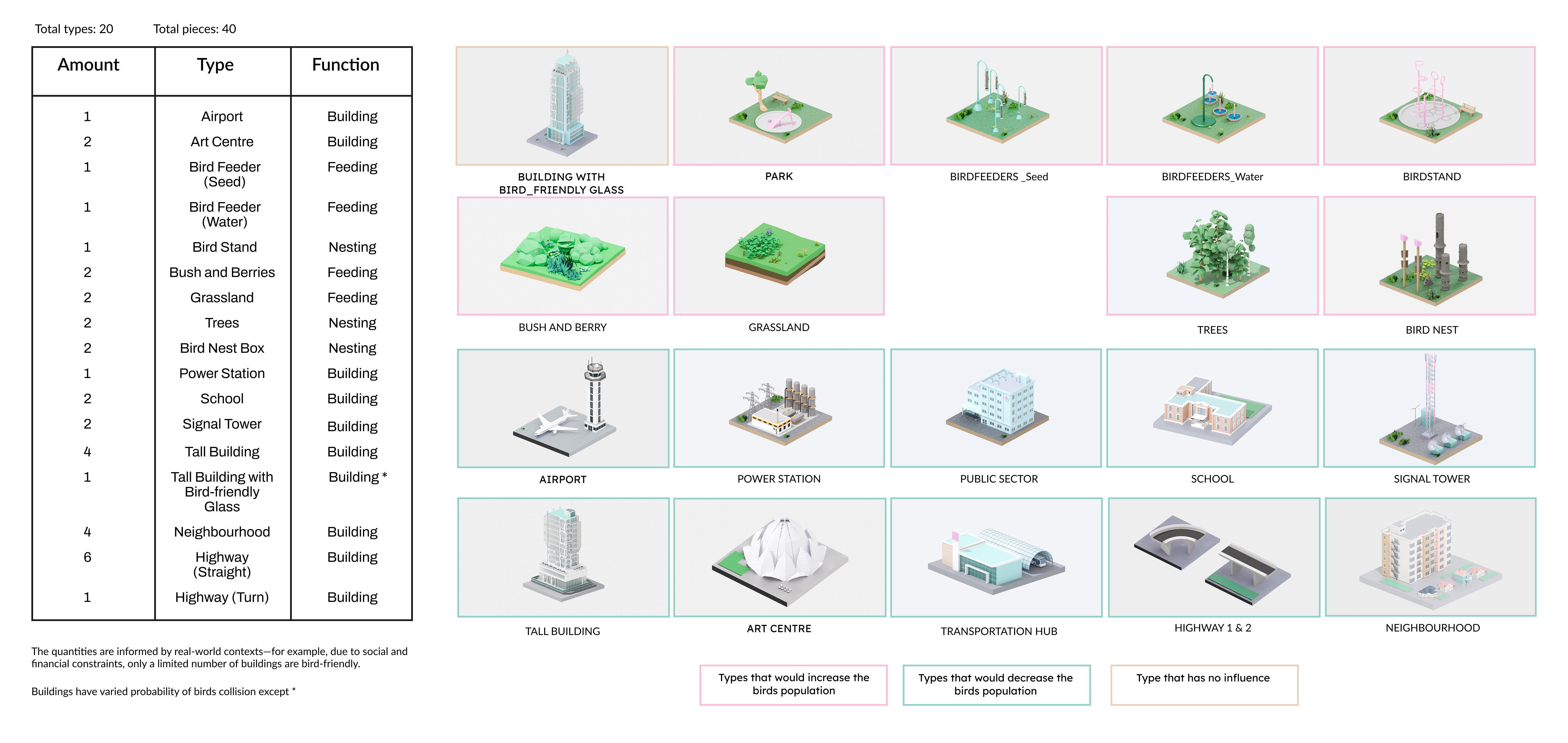
- Keep the quantity of each block type grounded in real-world constraints, preventing participants from creating an unrealistically bird-friendly city.
- Adjust scenario complexity for different audiences, using three UK native bird species as the standard starting level.
Mechanical and game development
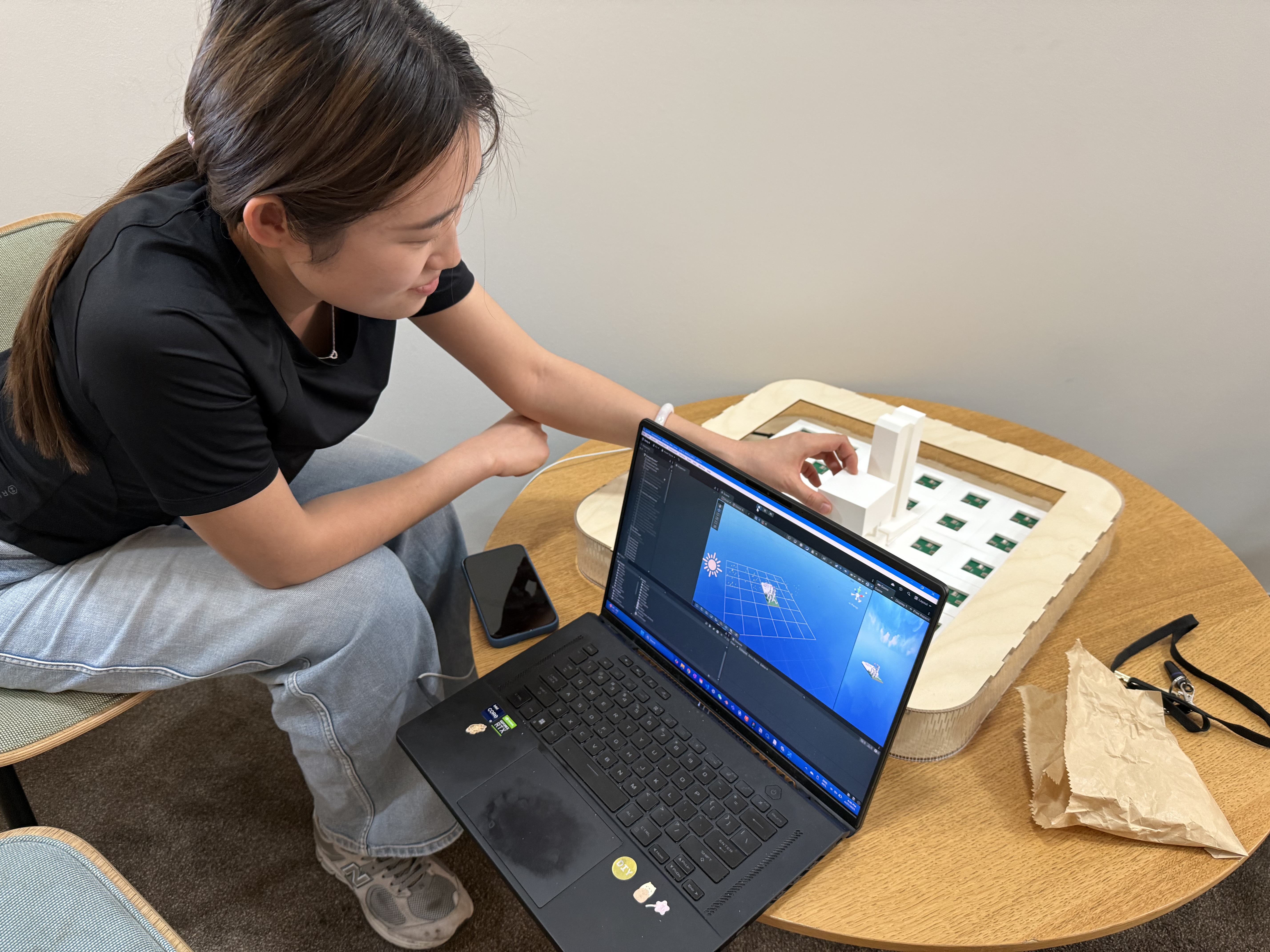
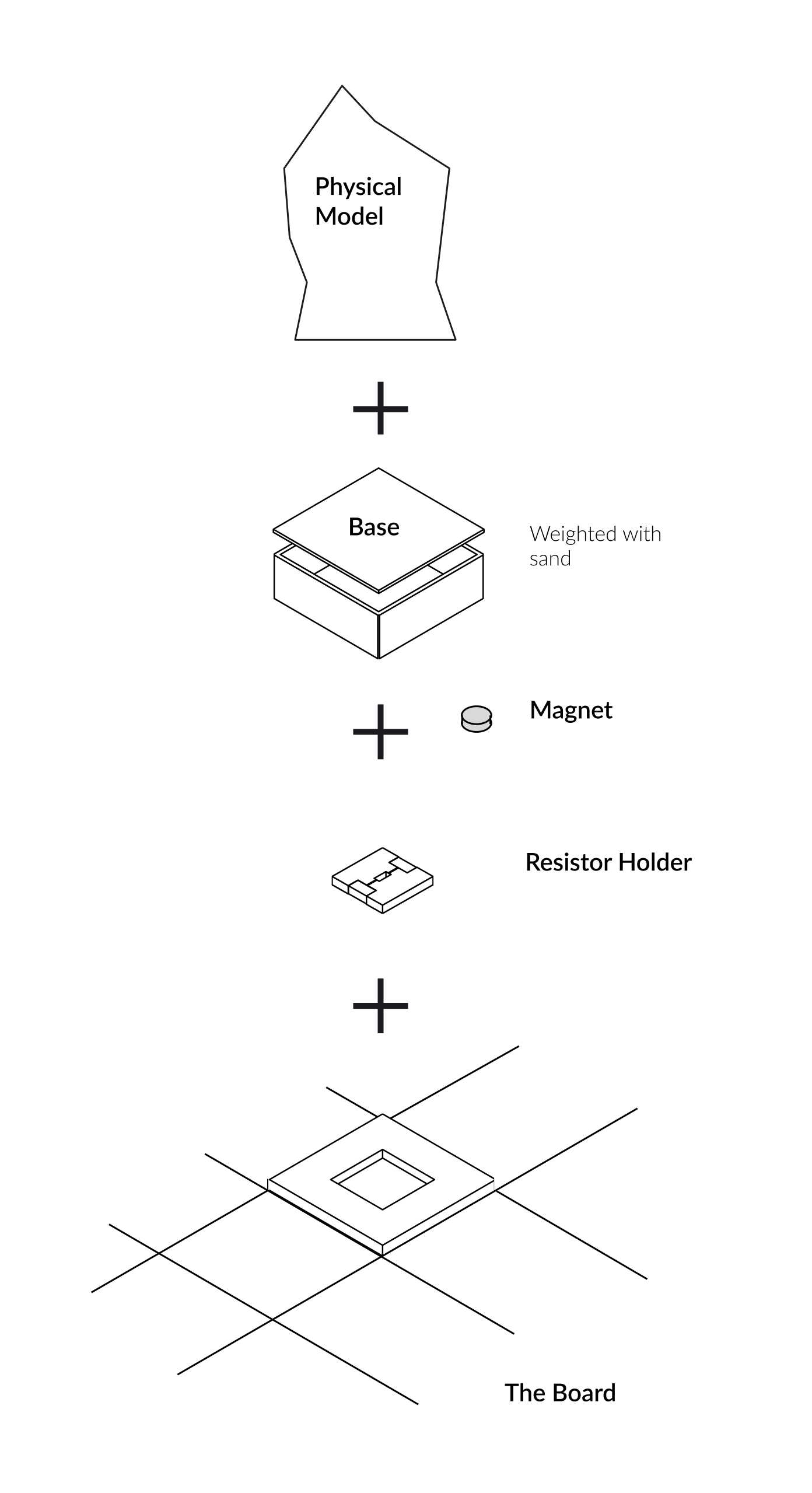
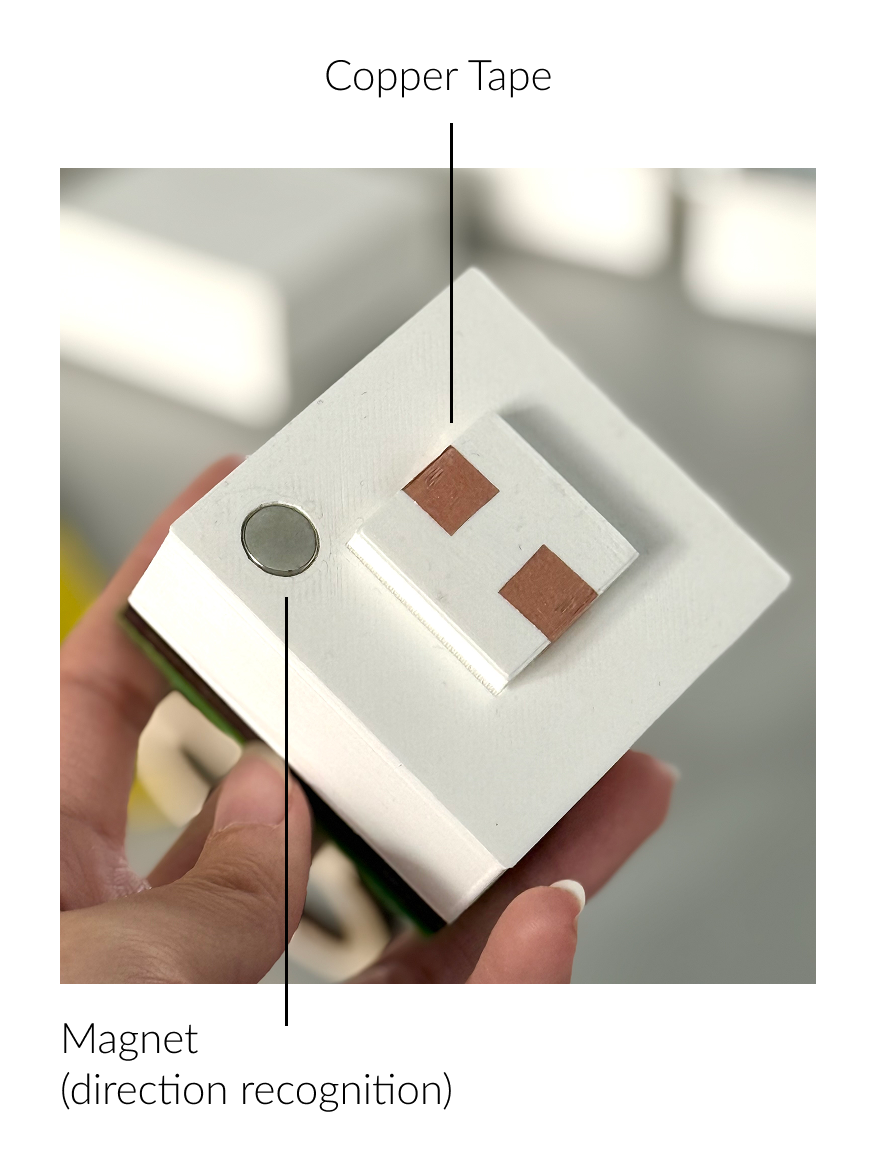
No existing technical solution met the need for a grid-based location and orientation system, so I designed and fabricated one using affordable sensors and materials. The final outcome combines resistors and reed switches.
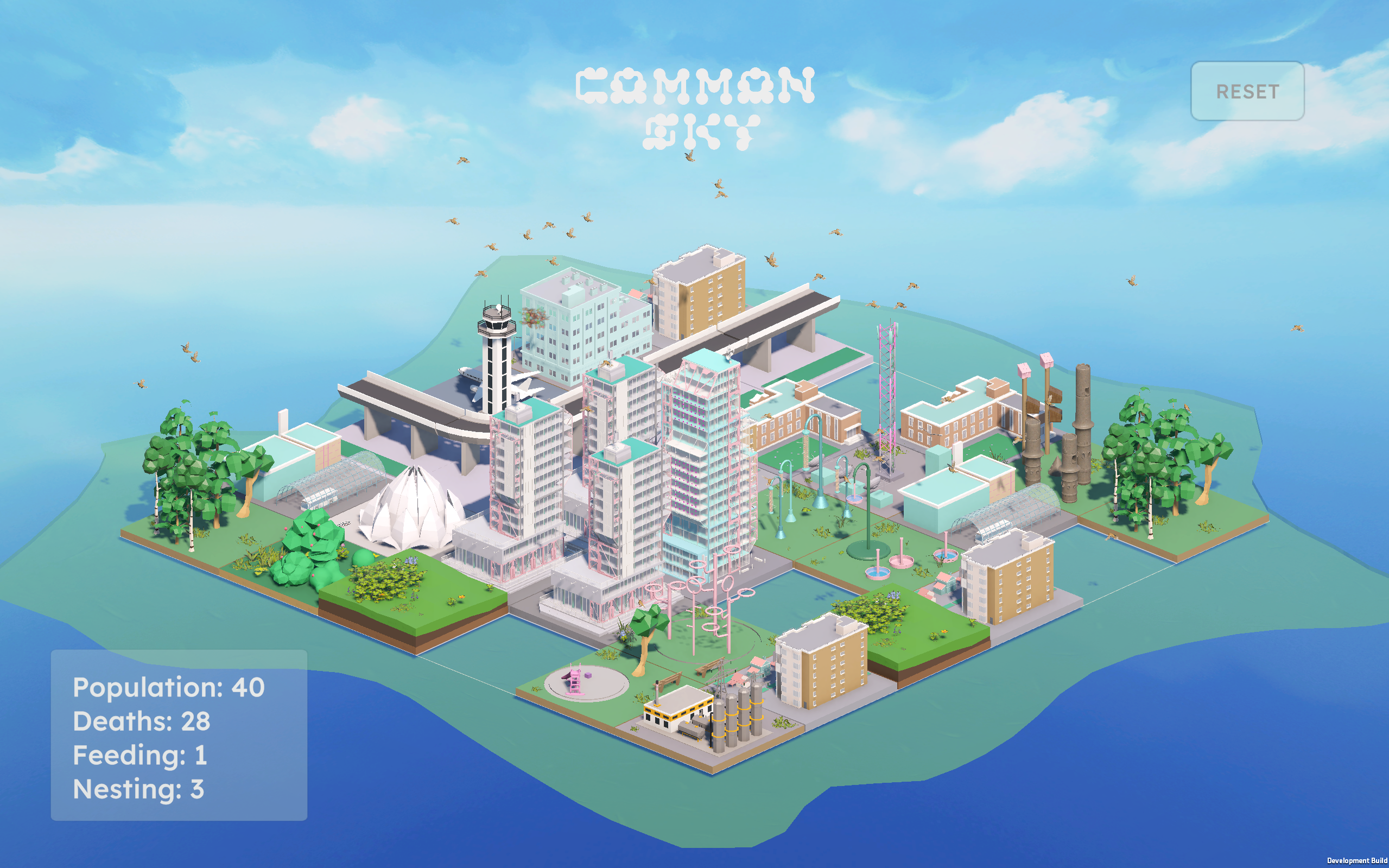
An ESP32 sends location and orientation data to Unity, where models created in Blender form a digital landscape. Bird behaviours respond directly to participants’ physical decisions.
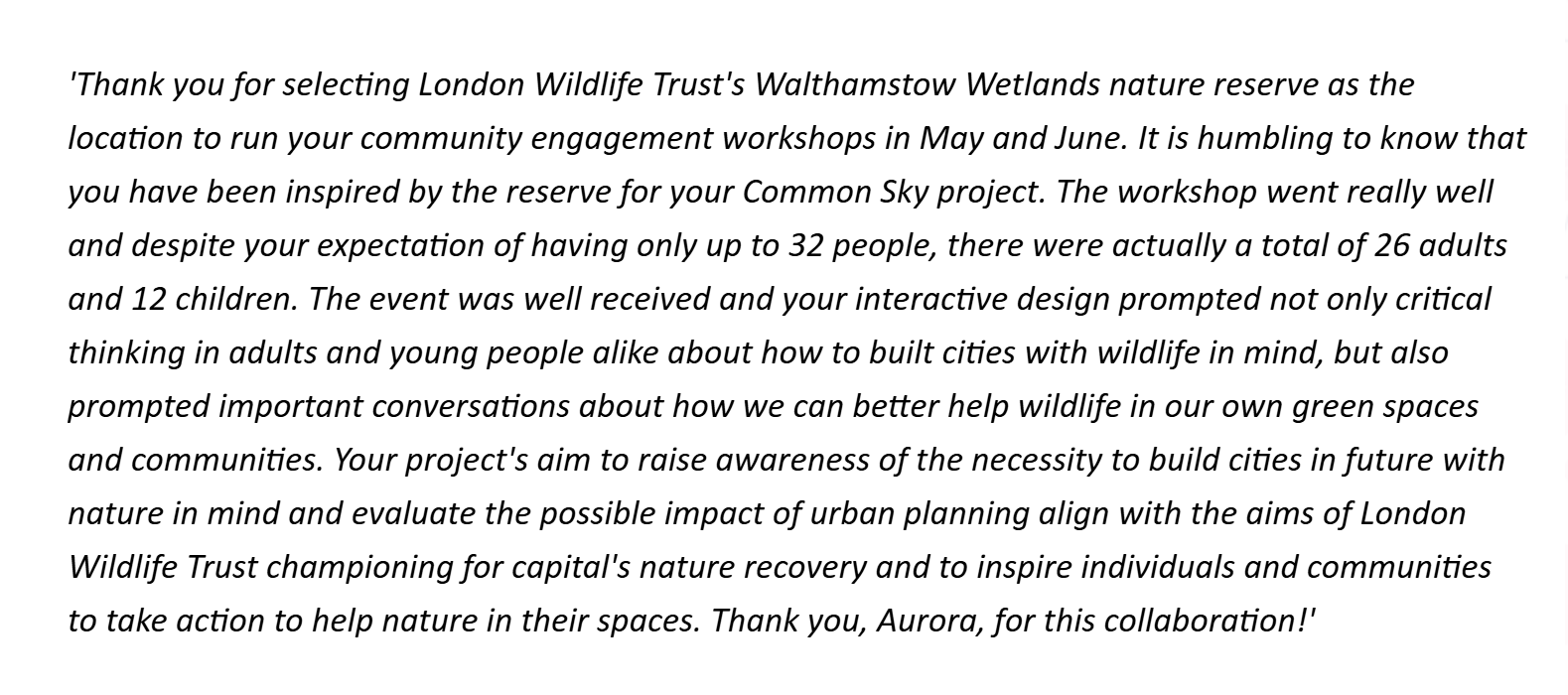
Feedback
Lora Todorova
Visitor Engagement Officer
London Wildlife Trust
Citation
- Burgstahler, S. (2020) Universal Design: Process, Principles, and Applications. DO-IT, University of Washington.
- Cousins, S. (2022) Tall buildings should not kill birds. RICS.
- Davis, N. (2023) Time to end war on birds and find a way to coexist, say experts. The Guardian.
- Ginsberg, A.D. (2021) Pollinator Pathmaker.
- Hendry, L. (2024) Eleven ways to help birds in towns and cities. Natural History Museum.
- Hornecker, E. (2015) Tangible Interaction. Interaction Design Foundation.
- Hornecker, E. and Buur, J. (2006) Getting a grip on tangible interaction: a framework on physical space and social interaction. CHI, 437–446.
- Levent, N.S., Pascual-Leone, A. and Lacey, S. (2014) The Multisensory Museum. Rowman & Littlefield.
- McCandless, D. (2012) Information is Beautiful. William Collins.
- McLuhan, M. (1964) Understanding Media: The Extensions of Man. McGraw-Hill.
- Simonsen, J. and Robertson, T. (2013) Routledge International Handbook of Participatory Design. Routledge.
- teamLab (2014) Sketch Town.
- Vygotsky, L.S. (1978) Mind in Society. Harvard University Press.